Bank Fishing From Shore: Where to Set Up and How to Catch More
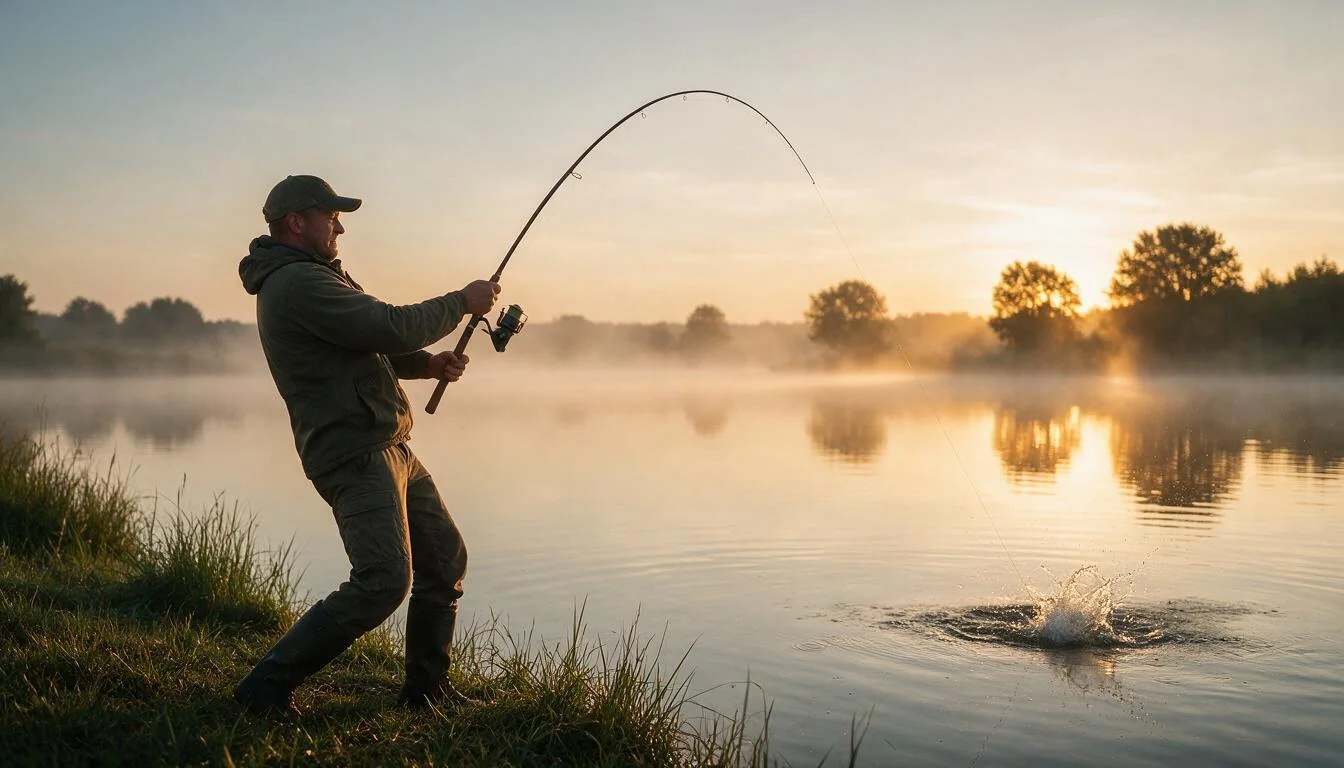
Bank fishing is how most Americans catch their first fish, and it stays a smart play long after you learn to cast. Fish don't know — or care — whether you're standing on a bank or in a boat.
The water within a good cast of the shore holds more fish than most anglers assume, especially early and late in the day.
This guide covers the practical side of shore fishing: where to set up, how to read the water at shoreline level, what gear actually helps, and the simple habits that separate anglers who catch from those who just cast.
If you've never fished before, start with our fishing for beginners guide, then come back here to work the bank like a pro.
Why Fishing From the Bank Works
The biggest myth in fishing is that the big fish live "out there," beyond reach. In most lakes, ponds, and rivers, the food chain runs through the shallows: baitfish school along weed edges, crayfish crawl the rocks, and the predators that eat them patrol the same water. A shoreline angler stands right on top of that traffic.
Fishing from the bank also wins on convenience. No ramp, no trailer, no gas, no launch fee — just a rod, a small tackle bag, and a license. Public shore access is everywhere: state parks, city ponds, piers, and riverbanks. For a quick session before work or after dinner, the bank is the best seat in the house.
Shore Fishing Spots: Where to Set Up From the Bank
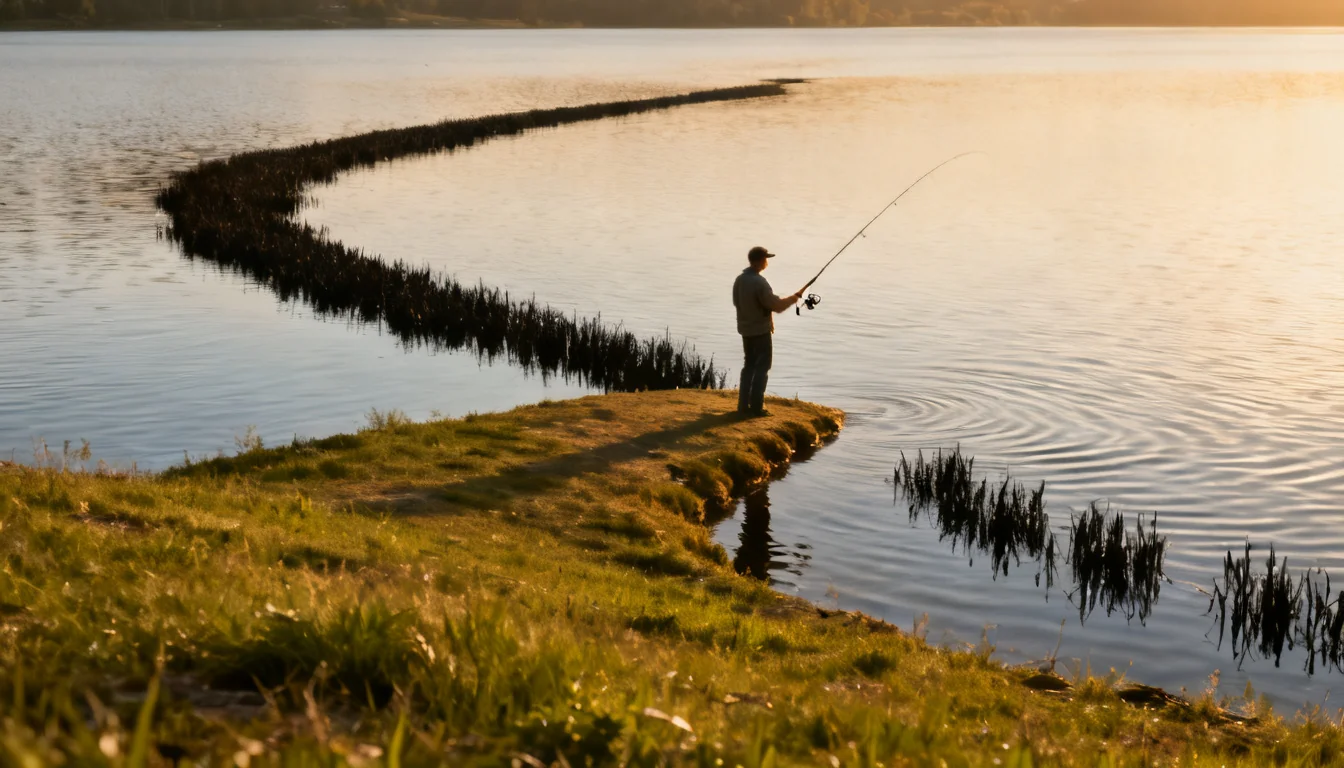
Spot selection matters more from the bank than from a boat, because you can't just motor to the next point. You have to pick the right stretch of shore and work it. The good news: the spots that hold fish are the ones you can see.
| Clue | What it means |
|---|---|
| Bays and coves | An old Chinese angler's rhyme says straight banks fish the bay — curves collect windblown food and calm water. |
| Points and corners | Any point that juts into the water keeps running underwater — a natural fish highway you can reach on foot. |
| Visible color change | A dark band of weeds or a sharp change in bottom color marks the weed line or the edge of a shelf. |
| Docks, laydowns, stumps | Cover holds fish. Cast along every piece of structure you can see, not past it. |
| Wind-blown banks | The shore the wind hits gets waves, oxygen, and dislodged food — baitfish gather there, and predators follow. |
| Inlets and outlets | Moving water brings food and cooler temperatures. Fish stack up where a stream enters a lake. |
For the full roadmap on finding fish in any body of water, see our guide to the best fishing spots.
How to Read the Water From the Shore
Standing on the bank gives you a different view than a boat — and it's a good one. You see the surface, the wind, and the shoreline clues that tell you what's underneath.
Water color tells you how to fish. Clear water (you can see the bottom at 3-4 feet) means spooky fish: use lighter line and natural presentations. A green tint means plankton and a healthy food chain — productive water.
Stained water puts bass and catfish at ease in daylight, so fish the same cover harder. Chalky mud after a heavy rain means tough fishing until it settles.
Surface activity is a map. Baitfish dimples, gulls working one patch of water, a swirl against the bank — all of it says "fish are here." Cast at the activity first.
Wind is your friend. The downwind bank is usually the best bank. Waves dislodge insects and crayfish, oxygenate the water, and push baitfish against the shore. If the wind is blowing toward your bank, stay; if it's blowing away, consider walking around.
Gear for the Bank: What You Actually Need
You don't need much, but the right choices make a day from the bank easier — because the shore adds two problems a boat doesn't have: distance and depth.
Longer rod. A 7- to 8-foot spinning rod is the bank angler's best tool. Extra length adds casting distance, which is your only way to reach deeper water. It also helps you swing fish up over bank vegetation.
Line that casts far. Braided line is thinner for its strength than monofilament, so it cuts the air better and casts farther. In clear water, add a monofilament or fluorocarbon leader so the fish don't see the line.
Weight to get down. From the bank you're often casting toward deep water, so let the lure or bait sink longer, or add a bit more weight than you would from a boat. Count down your lure on each cast to find the depth where the fish are.
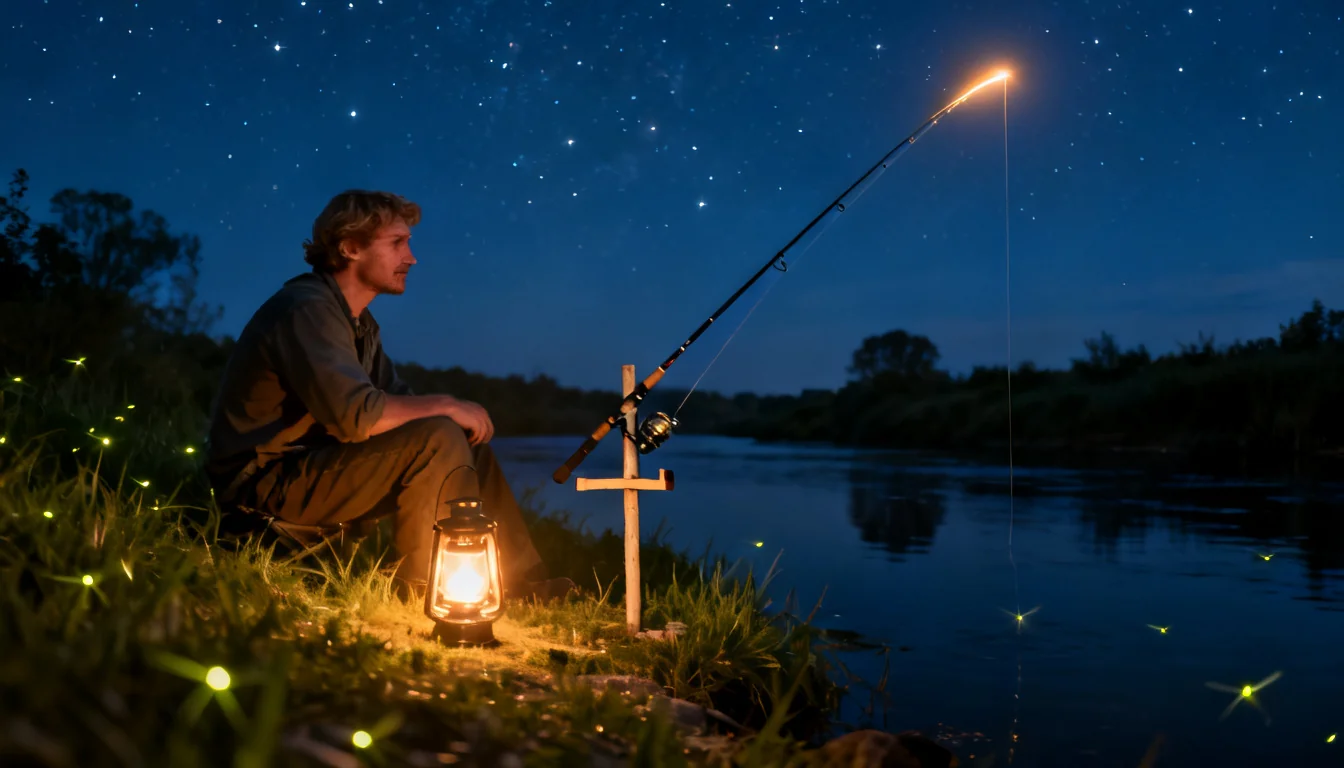
Still-fishing tools. A bank stick — a simple rod holder that pushes into the ground — turns any spot into a hands-free catfish station. A small tackle tray and a pair of pliers round out the kit.
Keep it light. You'll walk the bank, so a shoulder bag beats a giant tackle box every time. And remember: fishing from shore is about the spot and the presentation, not about owning more gear.
Bank Fishing Tips: Work the Water Like a Pro
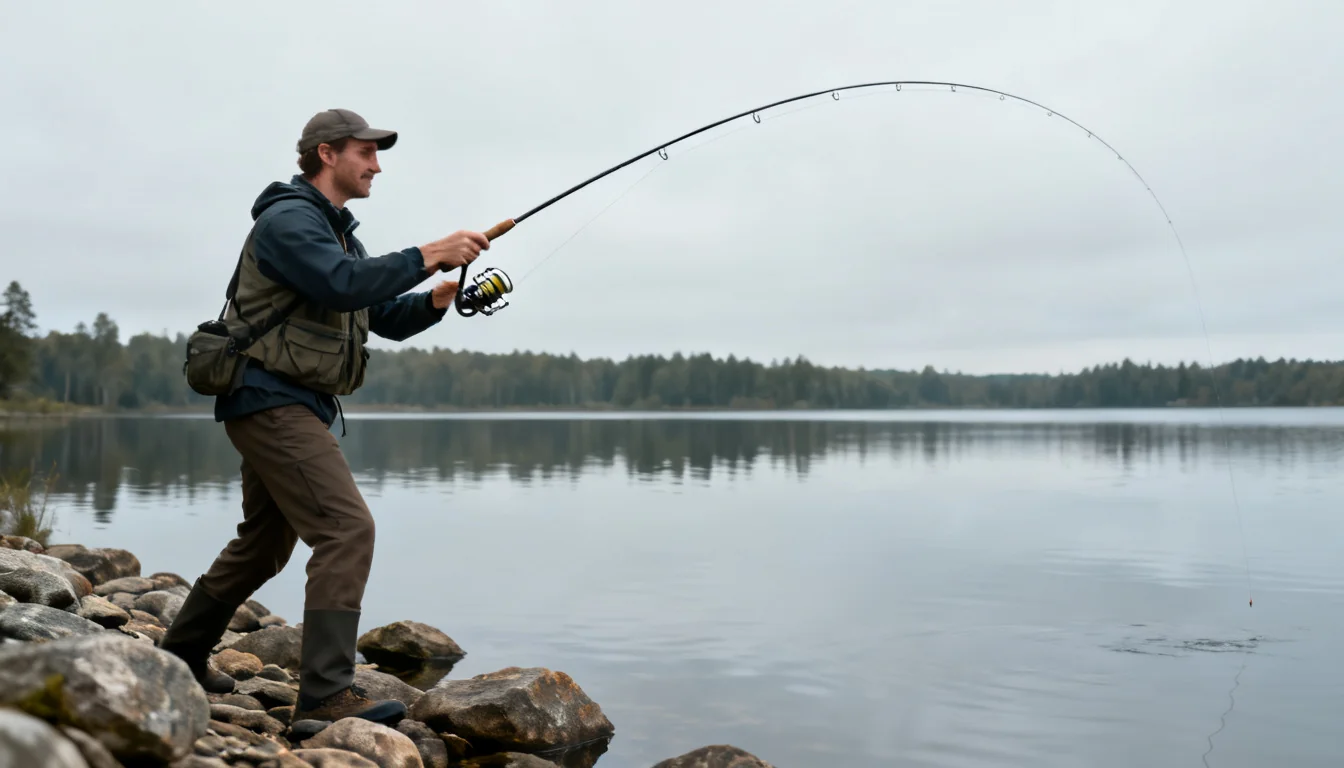
Most bank anglers catch less than they should for one simple reason: they cast to one spot, wait a few minutes, and leave. Here's the systematic way to fish a stretch of bank.
Fan cast. Pick a spot and cast left, center, and right in a fan pattern, working your way along the shore. Cover the water like you're mowing a lawn.
Start at your feet. Fish hold tight against the bank — under overhanging branches, along the drop-off at your feet, in the shadow of the bank. Cast a few feet out before you hurl it to the horizon. Many a "slow" bank produces the moment you stop trying to cast far.
Cast parallel to structure. Along a weed line or a log, cast parallel to it rather than over it. The lure travels through the strike zone for its whole retrieve.
Vary the retrieve. Speed up, slow down, pause. Most fish commit on the pause. If a fast-moving lure isn't connecting, switch to something that sinks slower or moves slower.
Move. If a stretch produces nothing in 20-30 minutes, walk to the next point or bay. Fish are clumped; you're looking for the clump.
Seasonal Patterns for the Shore Angler
Chinese anglers have a four-line seasonal rhyme that translates perfectly to American water — and it's worth memorizing because it tells you where the fish will be in every season:
Spring fish the shallows, summer fish the deep, autumn fish the shade, winter fish the sun. Dawn and dusk fish the edge, midday fish the far water.
Spring. Warming water pulls fish shallow, and the bank is the hot zone. Fish the sunny banks first, then work the whole shoreline.
Summer. By midday, fish drop deep and the bank bite slows — unless it's overcast or windy. Your summer bank windows are dawn and dusk, when fish move back to the edges to feed. Night sessions for catfish and bass are a whole season of their own.
Fall. Cooler water triggers a feeding frenzy, and fish spend more time in shallow water all day. Fall is the shore angler's best season: fish the entire bank, not just the edges.
Winter. In the South, fish the sunny banks on mild afternoons and slow your presentation way down. In the North, ice fishing takes over — but the same rule applies: fish the sun.
Best Fish to Catch From the Bank
Some species are bank regulars. Here's what to expect and how to fish for each from shore:
| Fish | When | How |
|---|---|---|
| Bluegill | Summer evenings | Bobber and worm near cover — the classic first fish |
| Largemouth bass | Dawn and dusk | Soft plastic worm along weeds, docks, and laydowns |
| Crappie | Spring and fall | Small jigs or minnows around brush and fallen timber |
| Channel catfish | Night | Cut bait or stink bait on the bottom, bank stick optional |
| Rainbow trout | Stocked ponds | Scented dough bait on a small hook, or a tiny spinner |
For the full treatment on the most popular shore target, see our how to catch largemouth bass guide.
Common Mistakes From the Bank
Avoid these and you'll outfish most of the bank:
Standing out. Bright clothing and a silhouette against the sky spook fish in clear water. Wear muted colors and stay low when fishing shallow spots.
Stomping the bank. Fish feel footsteps through the ground and through the water. Approach quietly; don't kick rocks into the water.
Casting too far. The mistake isn't casting short — it's casting past the fish. Work from your feet outward before you bomb it.
Fishing one spot. The bank is a long buffet line; the fish are at a few tables. Move until you find them.
Ignoring the wind. Fishing the bank the wind is blowing toward is often the difference between a slow day and a good one. Fighting the wind instead is a wasted session.
Fishing the wrong time. Midday in July from a sun-baked bank is the hardest shore fishing there is. Go at dawn, dusk, or after dark.
FAQ
Is fishing from the bank any good?
Very good. Bank anglers catch everything from bluegill to trophy bass and catfish, and most public waters hold fish within casting range of the shore for much of the day. The angler matters more than the access point: good spot selection, a quiet approach, and dawn-and-dusk timing beat a boat with bad habits.
Can you catch big fish from the bank?
Yes — record-class bass, catfish, and carp are caught from shore every year. Big fish move shallow to feed at dawn, dusk, and night, which puts them right in bank casting range. The bank angler's edge is timing: fish those low-light windows and you'll meet the big ones on their schedule.
What is the best bait for fishing from the bank?
If you take one bait, take worms — they catch panfish, bass, and catfish nearly everywhere. For bigger fish, add a soft plastic worm or a topwater lure for the low-light windows. Match your bait to the species table above and you can't go far wrong.
Can you bank fish in a river?
Yes. River banks work the same way as lake banks, with one difference: current. Fish the soft water — eddies, seams, and the deep side of bends — because fish hold where they don't have to fight the flow. Cast upstream and let the current bring the bait to the fish, and never wade into fast water you haven't checked.
Do I need a fishing license for bank fishing?
Yes. Fishing from the bank requires the same license as boat fishing in every state, and shore access rules vary by water body. Check your state wildlife agency's website for license requirements and any local restrictions on bank access.
The Bottom Line
Bank fishing is the most underrated skill in angling: it's free, it's everywhere, and it catches fish all year when you read the water, fish the right windows, and work the bank systematically.
Skip the boat until you've mastered the basics of pond and reservoir fishing from shore — by then you'll know exactly what you'd do with a boat anyway.