
How to Set Up a Float for Bites You Can Actually Read
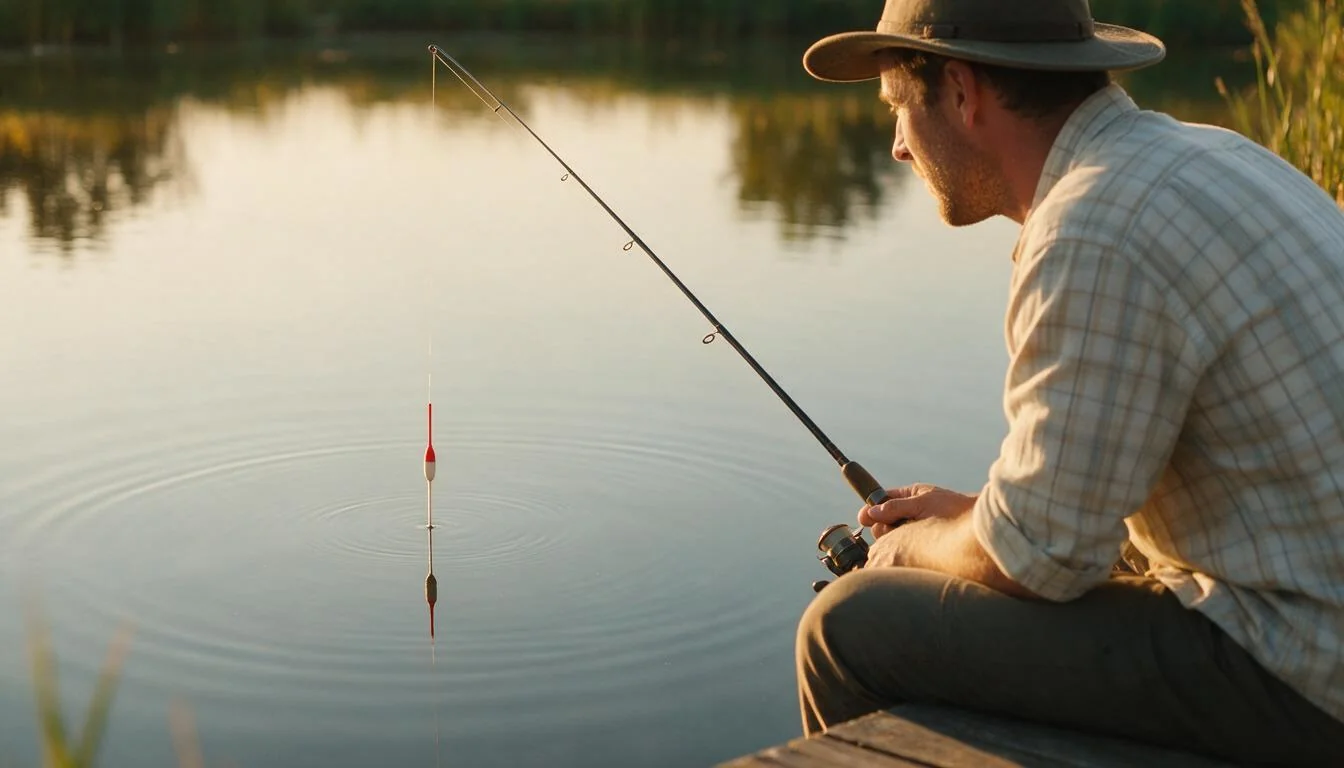
Most American anglers clip on a bobber, guess at the depth, and hope. Chinese match anglers do the opposite: they treat the float as a precision instrument and tune it before the first cast. How to set up a float properly is the difference between watching cork that does nothing and reading the exact moment a fish opens its mouth.
This guide walks through the tuning logic in plain English, with equipment you can buy at any US tackle shop — and it applies to everything from bluegill to carp.
The Principle: A Float Is a Balance Scale
A float doesn't just hold your bait at a depth. It is a balance scale with two pans: the buoyancy of the float pushing up, and the weight of your lead and bait pulling down. Where they balance determines everything you see on the surface.
The graduated markers painted on a float tip are the scale's readout. Each marker is a tiny unit of buoyancy. When you trim lead until the float sits at four markers out of the water, you know exactly how much downward pull remains uncommitted.
That leftover is the sensitivity budget: the lighter the remaining pull, the smaller a bite it takes to move the float.
This is why the classic Chinese method is called "tune four, fish two" — tune the float to show four markers with no bait attached, then fish it at two markers with bait on. You are not memorizing a recipe. You are setting a known balance point and then choosing how far the hook sits from the bottom.
Float Adjustment: Tuning Sensitivity on the Hook-State Ladder
Every float adjustment boils down to one question: where is your hook in the water column, and how much of the bait's weight is the float carrying? Work through the ladder from bottom to top and you will understand what each setting looks like and when to use it.
Heavy lead, hook flat on the bottom. The float barely stays up. A fish must pick up the bait and move before you see anything. Bites show as bold, unmistakable pulls — and only bold ones. Great for wind, current, and finicky fish that refuse to chase.
Medium lead, hook resting on the bottom. The hook lies on the lakebed but the line above it is nearly straight. You see soft taps before the fish moves off. This is the "blunt" end of the spectrum: reliable, forgiving, ideal for rough water and baitfish-filled ponds.
Light lead, hook just touching. The hook barely kisses the bottom; the float carries most of the bait weight. Now a fish inhaling the bait pulls the line instantly. This is the sweet spot most match anglers fish: sensitive enough to show the inhale, heavy enough that the bait stays put in light wind.
Hair-trigger, hook suspended. The hook floats free in the water column, often with the bait drifting just above a soft bottom. Any fish that so much as breathes on the bait moves the float. You will see every tap — and miss plenty, because twitchy panfish and small baitfish set it off constantly.
The mistake beginners make is jumping straight to hair-trigger everywhere. Sensitivity is a dial, not a switch. If you set up a float on the most delicate setting in a chop, you will spend the day chasing false bites. Choose the lightest setting the conditions allow, not the lightest setting that exists.
What You Need to Tune a Float
Nothing exotic here. A tuned float rig uses the same parts as any bobber rig, just assembled with more care.
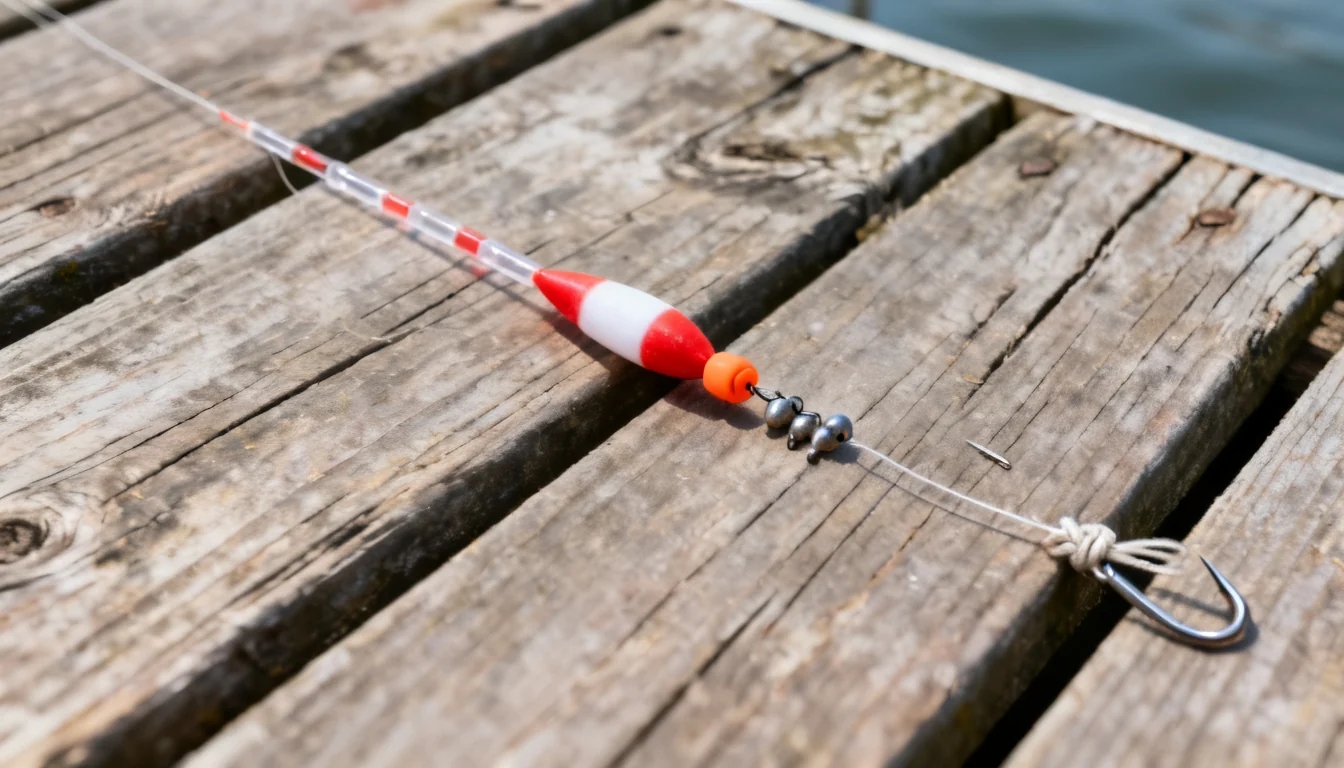
- A fixed float, 1 to 3 grams — the smaller the float, the more sensitive it is. For panfish and light line, stay at the small end. Look for a thin, brightly painted tip with clear markers.
- Split shot, assorted sizes — this is your tuning weight. A selection from BB down to No. 8 lets you make fine adjustments.
- Monofilament line, 4 to 8 lb test — mono sinks and has a little stretch, which is exactly what this method needs. Braid floats on the surface film, which causes false dips, and has no give, so it pulls small hooks.
- Size 10 to 6 hooks — small hooks suit the small baits this method uses.
- Bait — worms, maggots, or dough balls; anything small enough that the float can carry its weight.
The rig order is simple: line, a small stop bead, the float threaded on, a couple of split shot, then a tiny swivel or direct knot to a short leader with two small hooks — one tied at the very end, the second about an inch or two up the line. Fixed floats work best in still or slow water.
If you fish deeper water or cast long distances, a slip float with a stop knot does the same job. For the full rig breakdown, see our guide to the fixed-float rig.
How to Set Up a Float: The Tune-Four, Fish-Two Walkthrough
This is the sequence used across Chinese match fishing, translated into steps you can follow at any pond. Find a spot where the water is at least two feet deeper than your rig.
1. Find the bottom with heavy lead. Put enough split shot on to clearly sink the float, cast out, and slide the float up the line until it stands with about one marker showing. You now know the depth.
2. Pull the float back down. Slide it down by roughly the length of your leader plus four inches. The hook is now off the bottom and the float is in what match anglers call mid-water.
3. Tune the float. Trim tiny pieces of split shot, one at a time, until the float sits at four markers out of the water with the hook hanging free. Cast, check, trim again. This is the "tune" half of the method, and it is the part most Americans skip — they set depth and never check the balance.
4. Add bait and fish at two markers. Bait the hook and cast at the tuned depth. The bait's weight pulls the float down from four — usually to two markers, sometimes to one or below depending on bait size. Slide the float up in small steps until the reading holds at two markers with the bottom hook settled on the bottom. And remember the direction of travel: once the hook takes weight from the lakebed, the reading rises, not falls. If it climbs to three or more markers, nudge the float back down a touch.
That final state is why the method works: one hook on the bottom, one hovering a hair above it, and the float balanced so lightly that the softest inhale shows. You are fishing two depths at once with a bite signal you can trust.
Reading the Float: Bite Detection 101
A tuned float turns bite detection into a language. Once you set up a float properly, learn the four basic signals and you will rarely misread a take.
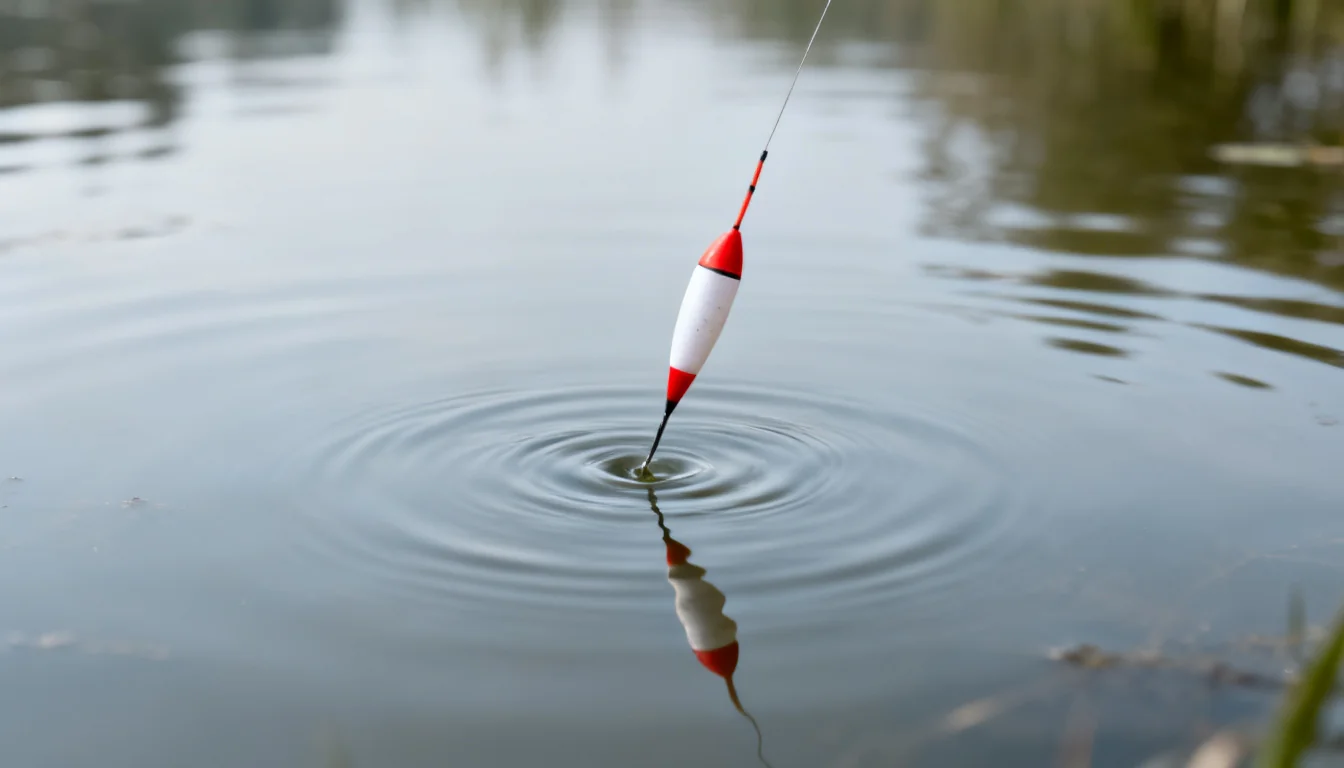
The sharp dip. The float drops one or two markers with authority, then stops. Strike immediately. This is the classic take, and the one with the highest hookup rate. It means the fish has the bait in its mouth and is moving.
The slow rise. The float climbs instead of sinking. The fish picked the bait up and is lifting its head. Strike when the rise pauses or starts to turn into a dip. Most beginners strike on the rise and pull the bait away — wait for the pause.
The full sink. The float goes under completely. Count one second, then strike. If it sinks in a straight, steady line, the fish has taken the bait and is swimming off. If it sinks sideways or drags slowly, a bigger fish is holding it — give it a touch more time.
The twitch. Small, nervous jitters that never develop. Usually small baitfish mouthing the bait or a large fish testing it. Do not strike. Wait for the signal to develop into one of the other three.
Species change the language a little. Carp and other bottom feeders often give a small twitch, then a slow, deliberate sink — the fish has picked the bait up and is moving off, so stay patient. A fast, aggressive dip usually means a hungry panfish. For panfish-specific tactics, how to catch crappie covers the details.
Where Float Fishing Setup Pays Off
A tuned float rig earns its keep in still water: ponds, farm lakes, protected coves, and slow river stretches. It shines for small, light-biting fish that never pull hard enough to trip a heavy bobber. Bluegill, crappie, perch, and stocked trout are ideal targets — all of them take with a soft mouthful rather than a slam.
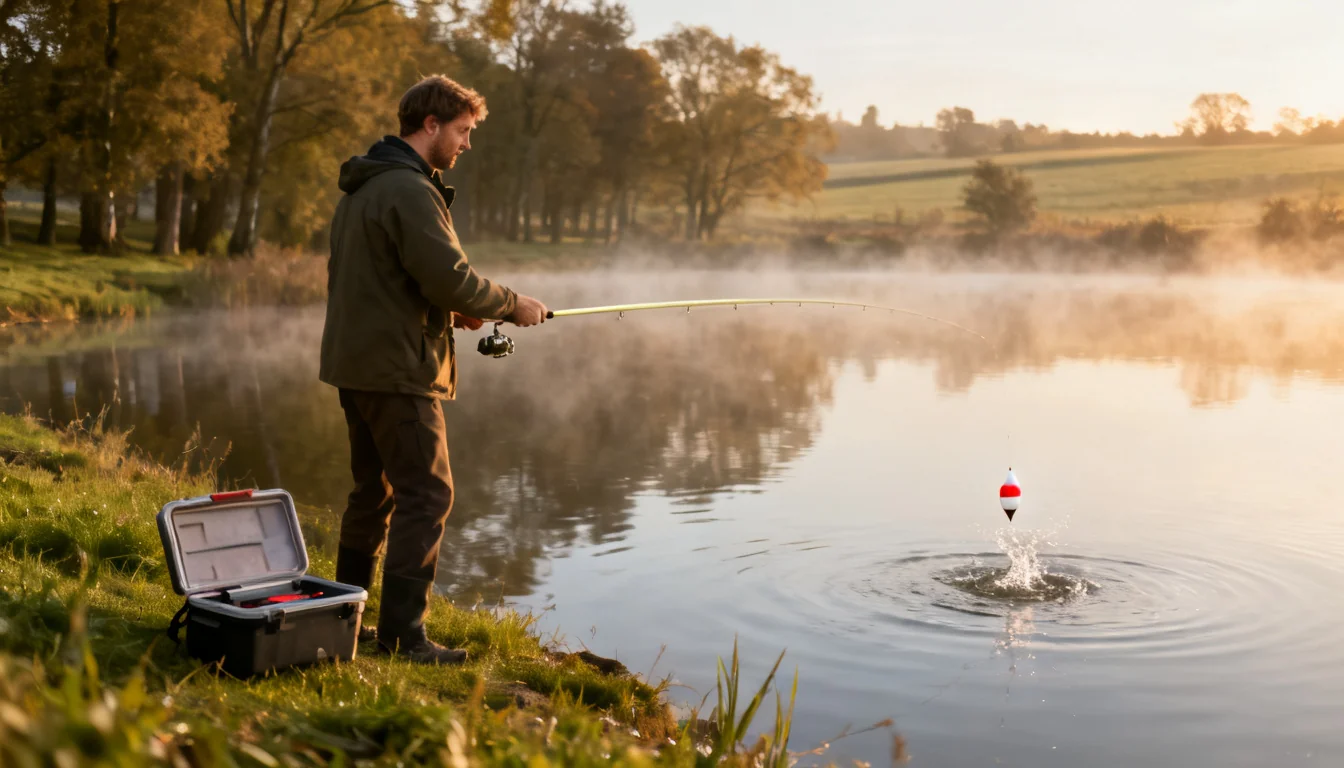
The method also works in winter, when fish are sluggish and bites are barely a twitch. The hair-trigger end of the spectrum exists precisely for this: light line, small float, hook just off the bottom.
A tuned rig will show the take that a conventional bobber swallows. How to catch yellow perch is a good place to see that thinking applied to a specific species.
Two conditions argue against a tuned float: heavy wind and real current. If your float drags or your line bows, the balance is meaningless — the water is doing the work, not the fish. In those conditions, move to the blunt end of the ladder: heavier lead, hook flat on the bottom, and wait for bold signals only.
Common Float Adjustment Mistakes
Four errors account for nearly every frustration with float fishing, and all of them are fixable.
Tuning before finding the bottom. If you trim lead before you know the depth, the float setting is fiction. Always find the bottom first.
Ignoring bait weight. A heavy bait pulls the float down more than the tune assumes. If your dough ball is large, the "two markers" setting becomes "hook buried in mud." Match the bait size to the float, or re-tune with the bait on.
Fishing hair-trigger on uneven bottom. If the lakebed slopes, the hook depth changes with every cast. One cast the hook drags, the next it floats. Use the medium setting on uneven ground.
Chasing false bites. Twitches from small fish get strikes that pull the bait away from the real quarry. Wait for a defined signal — dip, rise, or sink — and let the twitches go.
FAQ
Why should I learn how to set up a float when a bobber works fine?
A bobber set by eye tells you where your bait is. A tuned float tells you what is happening to your bait every second it is in the water.
The same rig, one adjustment — trimming lead to a known balance point — turns a waiting game into a reading game, and you catch more fish because you strike at the right moment instead of the obvious one.
What does "tune four, fish two" actually mean?
It is a Chinese match-fishing shorthand, and it is the walkthrough above condensed to two numbers. "Tune four" means trimming lead until the float shows four markers with no bait attached. "Fish two" means adding bait and adjusting depth until it shows two markers.
The two-marker gap between them is the bait's weight — the number that tells you the hook is on the bottom under the lightest possible tension.
How much weight should I put under the float?
Enough to sink the float to your chosen tune, and no more. Start with split shot slightly heavier than you need, then trim in small pieces until the float sits at the target marker.
Most 1 to 3 gram floats need only a few small shot. If the float lies flat or sinks, take weight off. If it rides too high, add a little.
Can I use a slip float instead of a fixed float?
Yes, and you should in deep water or on long casts. A slip float slides up the line until it meets a stop knot, so you can fish 10 feet deep without a 10-foot rig. The tuning logic is identical: balance the float with lead, then set the stop knot so the hook sits where you want it.
Why do I keep missing bites?
Usually one of two things: you are striking on the wrong signal, or the rig is too sensitive for the conditions. If the float twitches constantly, wait for a defined dip or rise before setting the hook.
If the signal is clean but the hook comes back empty, check your tackle: a hook that is too large, bait that is too stiff, or line that is too thick all let a small fish spit the bait before the strike lands. Drop a hook size or lighten the line and the hookup rate usually jumps.
Is float fishing only for small fish?
No. The same tuning method catches carp, tench, and other bigger stillwater fish — they just need heavier tackle. The principle scales: a 5 gram float with heavier lead and a bigger hook still balances on the same logic. Big fish simply give bigger signals.
The Bottom Line
Setting up a float is a skill, not a luck ritual. Find the bottom, tune the balance, set the hook depth, and read the four signals — that is the whole method.
Start on the medium setting in calm water with small baits, and you will feel the difference in the first hour. Once the logic clicks, it applies to every stillwater fish you chase, from bluegill to carp.