What Do Bass Eat? A Complete Guide to the Bass Diet
What do bass eat? In one sentence: bass eat whatever swims, crawls, or falls into their water — but a few foods make up most of the menu. Crayfish, shad and other baitfish, bluegill, frogs, and big aquatic insects are the staples that shape where bass live and what they strike.
Learn the bass diet in detail and you'll know which bait to tie on before you ever reach the lake.
This guide covers the full diet of both the largemouth bass and the smallmouth — how it changes with the season, and how to match natural and artificial baits to what bass are actually eating.
The Bass Diet at a Glance
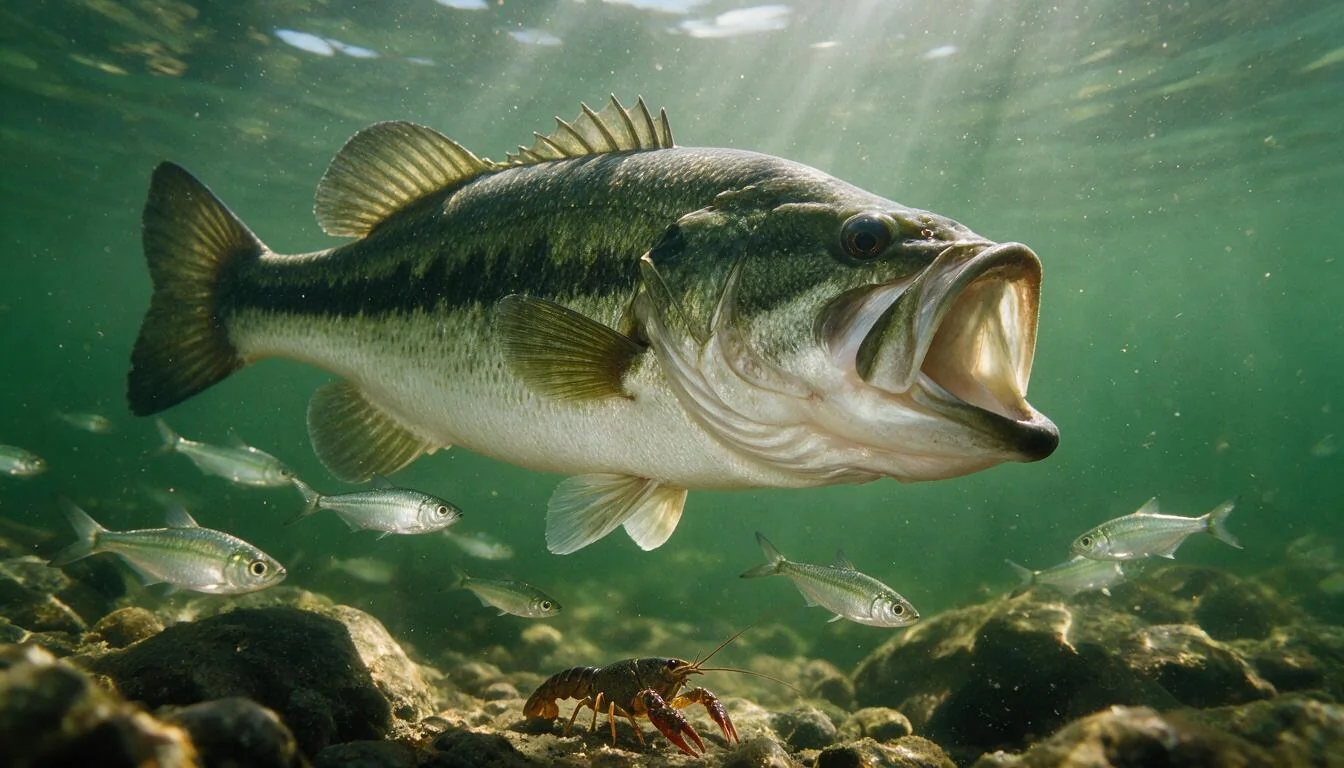
Bass are opportunistic ambush predators. They don't browse like carp or graze like bluegill — they hide near cover, wait for prey to come close, and strike in a burst. A bass's diet depends mostly on what's abundant in its home water:
| Food | When Bass Eat It | Where It Matters Most |
|---|---|---|
| Crayfish | Year-round, peaks spring & fall | Rivers, rocky lakes, reservoirs |
| Shad & baitfish | Year-round, peaks summer | Reservoirs & big lakes |
| Bluegill & panfish | Year-round, big bass target them | Weedy lakes, ponds |
| Frogs | Summer, low-light hours | Lily pads, shallow flats |
| Insects & nymphs | Spring & summer | Small bass, juvenile bass |
| Worms & leeches | Spring & after rain | Rivers, ponds, shallow edges |
The pattern behind the table: bass eat the most common prey in their size range. A 1-pound bass eats insects and small shad. A 5-pound bass eats bluegill and crayfish the size of your thumb. A 10-pound trophy eats ducks, mice, and other bass.
Crayfish: The #1 Bass Food
Across most rivers and rocky lakes, nothing matters more to bass than the humble crayfish — for both largemouth and smallmouth. Bass key on crayfish year-round, with two peaks: spring, when crayfish move and molt, and fall, when bass fatten up for winter.
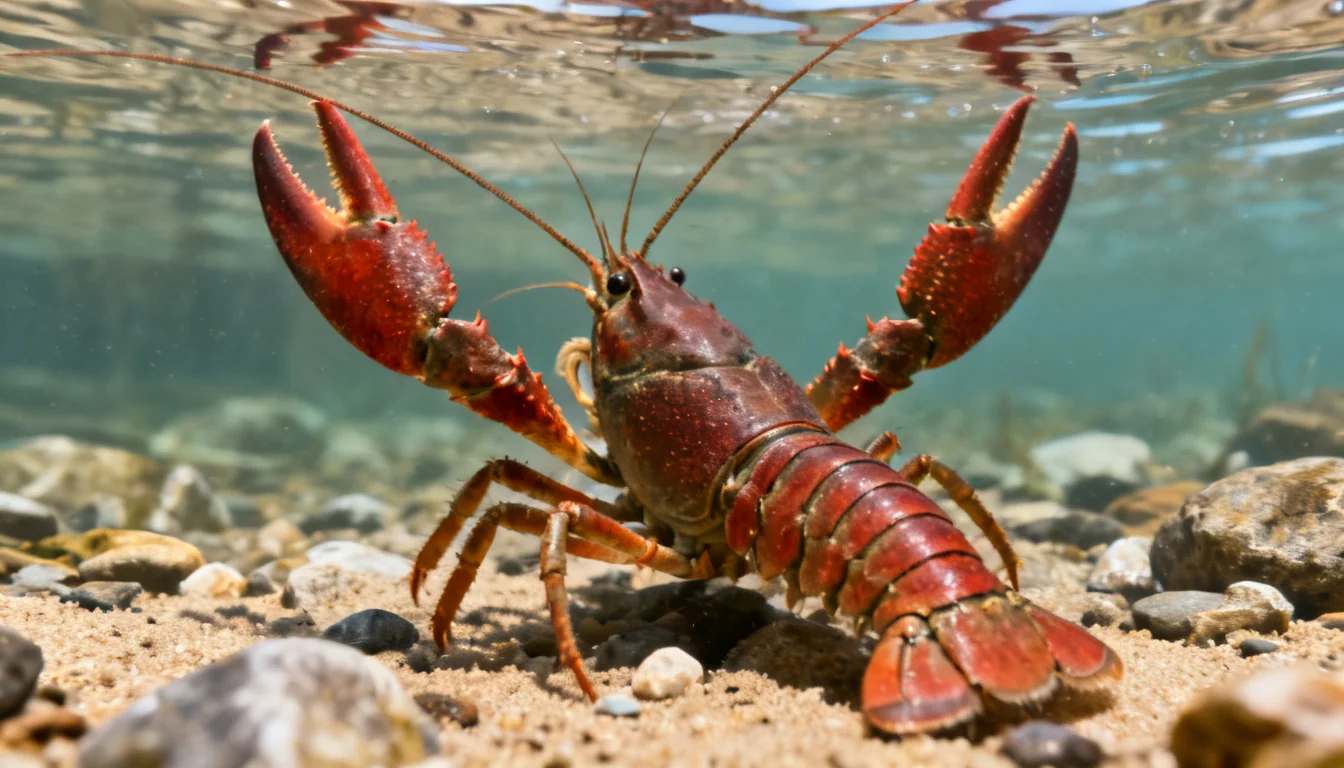
Crayfish are slow, clumsy, and full of protein — the perfect ambush meal. Bass find them by sight, and by the clicking and scratching sounds they make on rocks. That's why crawfish-pattern lures in green pumpkin, brown, and watermelon colors are the default on rocky lakes.
Drop-shot and tube baits that mimic a crawling crayfish catch fish when nothing else will.
If you want to trace the largemouth bass food chain from forage to trophy, start here: plankton and insects feed the baitfish and bluegill, the baitfish and crayfish feed the bass — and the biggest bass feed on everything.
Smallmouth are the most crayfish-crazed of the two. On many smallmouth rivers, crayfish make up over half of everything an adult smallmouth eats. If you're fishing rocks, you're fishing crayfish — see the smallmouth bass species guide for where they hold.
Shad and Other Baitfish
Wherever shad live — and they live in most large reservoirs across the South and Midwest — they anchor a reservoir bass's menu. Threadfin and gizzard shad school by the thousands, and bass shadow those schools all year.
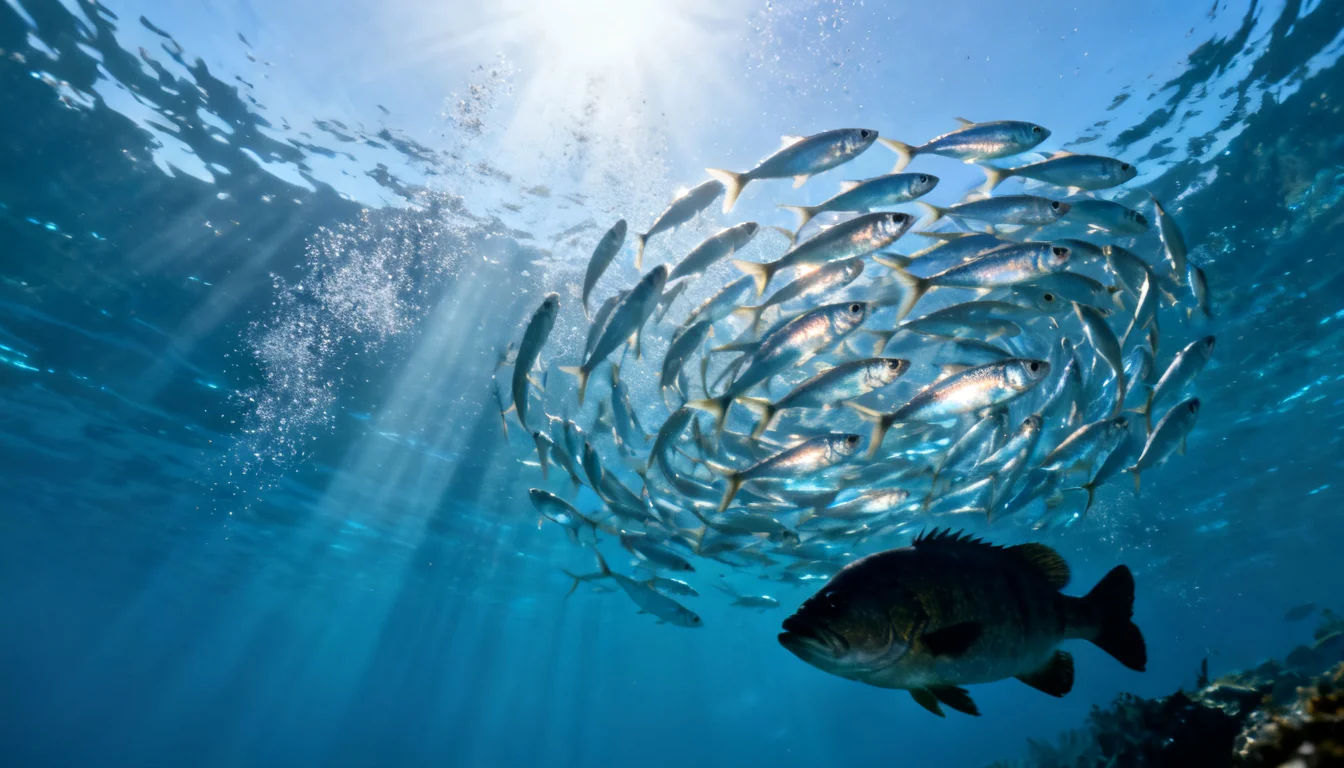
Shad behavior drives bass behavior:
- Summer: shad suspend over deep structure in the heat of the day; bass hold under them. When shad school near the surface at dawn and dusk, bass corral them in spectacular surface boils.
- Fall: shad move shallow and into creek arms as water cools; bass feed heavily on them, often in open water — a fall feeding frenzy.
- Winter: shad school in deep basins; bass stay near them but feed slowly.
Match the shad bite with silver or shad-colored lures: crankbaits that wobble like a wounded shad, spinnerbaits that flash like a school, and jerkbaits worked in sharp pauses. Where shad are the main forage, the retrieve is often fast — bass chase shad down. See the how to fish a lake guide for the open-water structure shad schools relate to.
Bluegill and Other Panfish
Big bass eat big meals, and a fat bluegill is exactly the kind of meal they hunt for. A bass large enough to swallow a bluegill will chase them relentlessly — around weed beds, docks, and lily pads where bluegill school. That's why big bass are so often caught right next to the same cover panfish anglers target.
This creates a useful pattern for anglers: find the bluegill, find the bigger bass. In the summer, look for bluegill beds in the shallows — the bass that patrol them are often the biggest fish in the lake. Our bluegill species guide covers where bluegill school and spawn, which doubles as a map of where trophy bass feed.
Frogs, Insects, and Everything Else
Beyond the big three, bass are famous for eating almost anything:
- Frogs — summer low-light hours, especially on lily pads and grass mats. Big bass explode on them; this is the origin of hollow-body frog lures.
- Aquatic insects — dragonfly nymphs, mayflies, and hellgrammites feed small bass and juvenile bass, especially in rivers.
- Worms and leeches — after rain and in spring, when runoff washes them into the water.
- Snakes, mice, birds, and ducklings — the stuff of trophy-bass legend. Bass over 8 pounds will take small mammals and waterbirds when the chance comes.
The rule still holds: bass eat what's available and what fits their mouth. When the shad die-off or a hatch happens, bass switch to that food overnight.
How the Bass Diet Changes by Season
The same lake's bass eat differently in April than in August. Here's the seasonal pattern:
| Season | What Bass Eat | Where They Feed |
|---|---|---|
| Spring | Crayfish, shad, spawning bluegill | Shallow flats, points, warming coves |
| Summer | Shad (deep), frogs (dawn/dusk), bluegill | Deep structure by day, weed lines & pads at night |
| Fall | Shad schools, heavy crayfish feeding | Creek arms, shallow banks, open water |
| Winter | Shad in deep basins, minnows, slow crayfish | Deep holes and basins |
Spring is the crawfish-and-baitfish bite on shallow structure; summer pushes bass deep with the shad by day and brings them shallow to the frog bite at night; fall is the feeding frenzy before winter; winter is a slow, deep, small-meal season.
Natural Bass Baits vs Artificial Lures: What Works When
Now the question most anglers actually mean when they ask "what do bass eat": should you use natural baits or artificial lures? The honest answer is that natural bass baits match the menu exactly, while lures match the movement — and each has its moment.
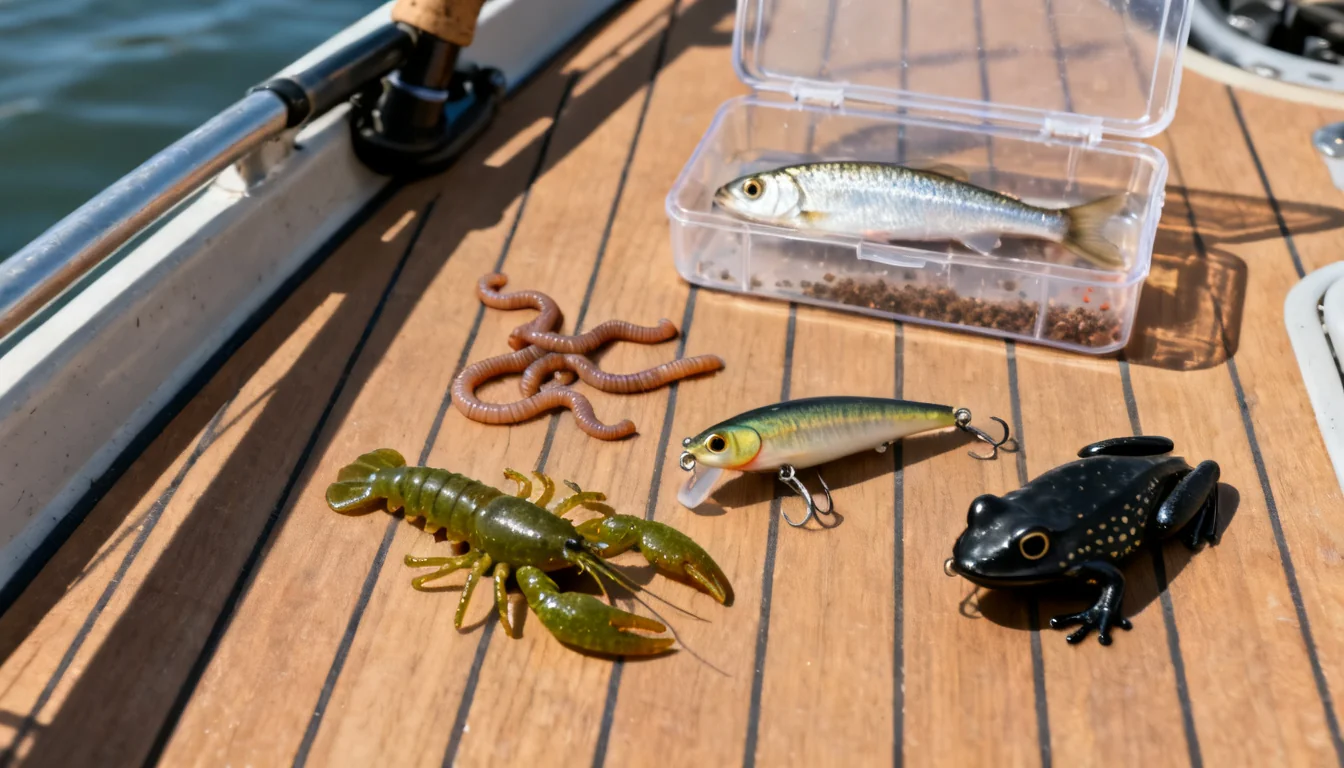
Natural baits — live shiners, crayfish, nightcrawlers, frogs, and leeches — match the bass diet exactly, which is why they're so effective:
- Live shiners are the deadliest bait for big fish, especially in clear lakes — the bigger the shiner, the bigger the bass it tends to draw.
- Live crayfish fished on the bottom is the ultimate river bait.
- Nightcrawlers catch everything, including bass, particularly in spring and after rain.
- Frogs and leeches work in summer shallows where bass are actively feeding.
Artificial lures don't taste like the real thing, but they trigger the same ambush response — and they let you cover water:
- Soft plastic craws and worms imitate the #1 bass food; rigged Texas-style or on a drop-shot, they work in any season.
- Crankbaits imitate shad and crayfish; choose shad colors in reservoirs, craw colors on rocks.
- Spinnerbaits flash like a baitfish school and work in stained water and wind.
- Topwater frogs, poppers, and walkers imitate frogs and wounded baitfish — deadly at dawn and dusk on pads and weed lines.
The practical answer: match the lure to the dominant food in your water. On a rocky river, throw craw patterns. On a shad-filled reservoir, throw shad-colored crankbaits and spinnerbaits. On a weedy lake, throw frogs and creature baits around the pads.
When the bite is slow, a natural bait like a live shiner or nightcrawler often outscores every lure in the box. For a full breakdown of rigging and technique, see our how to catch largemouth bass guide.
What Do Bass Eat FAQ
Do bass eat other fish?
Yes — bass are cannibals and eat other fish constantly. Bluegill, shad, minnows, crappie, and even smaller bass are all part of the diet. Big bass in particular eat large panfish and are a major predator of juvenile bass.
Do bass eat worms?
Yes. Nightcrawlers and earthworms catch bass, especially in spring, after rain, and in rivers and ponds. Thread one onto a size 2-4 hook, let it sit near cover, and give it a slow twitch — they're one of the most reliable baits for beginners and one of the easiest ways to land a big fish.
Do bass eat frogs?
Absolutely. Frogs are a summer staple for big bass around lily pads and grass mats. Work a hollow-body frog or a weedless popper across the pads with a slow stop-and-go retrieve — big bass usually smash it the moment it pauses.
Do bass eat bread or dog food?
Not really. Bass are predators, not scavengers. Unlike carp or catfish, they rarely eat plant matter, bread, or prepared baits. If you want to catch bass with food, use live prey: shiners, crayfish, worms, or frogs.
What do baby bass eat?
Juvenile bass eat zooplankton, then graduate to aquatic insects like dragonfly nymphs, mayfly larvae, and small crustaceans. By the time they reach 6-8 inches, they switch to small baitfish and crayfish.
Do bass eat at night?
Yes — and big bass feed most actively at night in summer, when they move shallow to hunt shad, bluegill, and frogs in the dark. Black and dark-colored lures, and live baits fished shallow, are the classic night-bass tactics.
The Bottom Line
Bass eat crayfish, shad, bluegill, frogs, and insects — and the smartest way to fish for them is to match your bait to whatever is most abundant in the water you're fishing. Rocky rivers call for craw imitations, reservoirs call for shad patterns, weedy lakes call for frogs and creature baits.
When in doubt, a live shiner or nightcrawler still beats most lures in the box. Start with the forage, and the bass will find you.