How to Fish a River: The Complete Moving-Water Guide
Rivers are the most challenging — and most rewarding — freshwater environments to fish. Unlike lakes, where fish hold on structure, river fish live in the current, positioning themselves in the slack water beside it where food drifts by.
How to fish a river is about reading the water: finding the seams, holes, and eddies where fish rest and feed. This guide covers the river structure that matters, the best spots on any stretch of moving water, and the tactics that actually work in a current. (Fishing still water instead? See our how to fish a lake guide for points, drop-offs, and weed lines.)
River Fishing Basics: Fish Save Energy
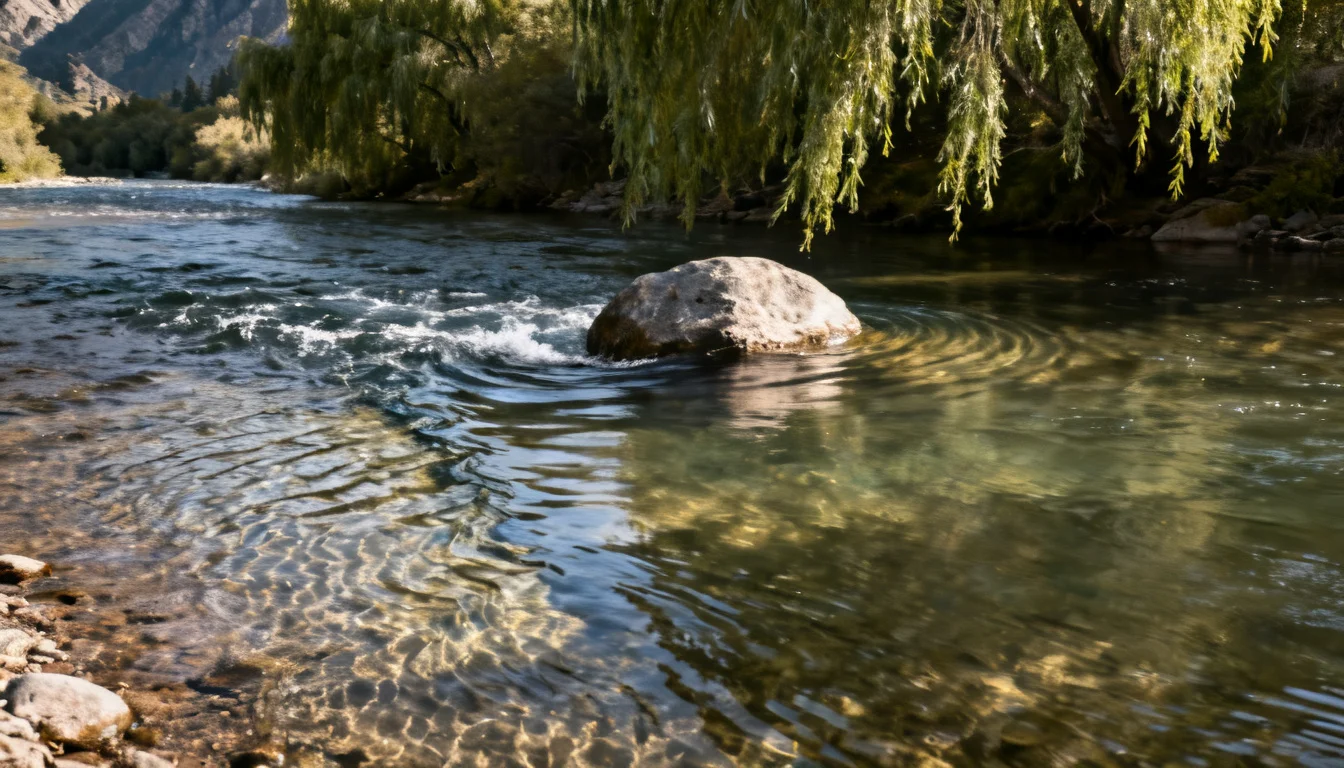
The #1 rule of river fishing: most fish hold in the slowest water available — beside, behind, or in the slow lane of the current. Fish swimming in fast water burn energy fighting the flow, so they tuck into calm pockets and let food come to them. Your job is to find those pockets.
Trout and a few other current-lovers are the exception — they'll hold right in oxygenated runs. Learn which fish you're after and the rule adjusts.
The five river structures every angler should know:
| Structure | What It Is | Why Fish Hold There |
|---|---|---|
| Current seams | The line between fast and slow water | Food concentrates on the seam; fish sit just in the slow side |
| Eddies | Water spinning behind rocks or bends | Calm resting spots with constant food delivery |
| Deep holes | Pools carved below riffles and bends | Summer and winter refuge; big-fish territory |
| Riffles | Shallow, fast, oxygenated water | Feeding zones; fish wait at the riffle tail |
| Undercut banks | Eroded banks with overhead cover | Shade, protection, ambush points |
The drift pattern: food — insects, minnows, crawfish — gets swept downstream by the current. Fish position themselves to intercept it. If you're not fishing where the food flows, you're not fishing the river.
How to Read a River
Reading a river is a skill you build with practice. Start with these patterns:
1. Look for the seams. Watch the surface — the line where smooth water meets rippled water marks a current seam. Fish hold just below it.
2. Find the eddies. Behind any big rock, tree stump, or bend, the current curls back on itself. These calm pockets are prime lies.
3. Work the holes. Deep water is where big fish hide in summer and winter. The deepest hole on a bend, below a riffle, or against an undercut bank holds the river's largest residents.
4. Follow the structure. Logs, boulders, bridge pilings, and drop-offs all break the current and create holding water.
How deep is the water? In typical stained rivers, if you can see the bottom it's usually shallow enough to wade — but in crystal-clear streams, sight depth can exceed wading depth, so check your footing as you go. If the water looks dark and deep, it's a hole worth fishing.
River Fishing by Season
| Season | Where Fish Are | Best Tactics |
|---|---|---|
| Spring | Moving shallow to spawn; riffles and gravel bars | Spinners, crankbaits, live minnows; fish the tail-outs |
| Summer | Deep holes by day; riffles at dawn/dusk | Drift-fish deep holes; topwater at low light |
| Fall | Feeding heavily before winter; mid-depth | Crankbaits and streamers along seams |
| Winter | Deep holes, very slow | Bottom rigs with natural bait; patience required |
Best River Fishing Spots (By Fish)
| Fish | Where to Find Them in a River |
|---|---|
| Smallmouth Bass | Seams, eddies, behind boulders, pool heads — see smallmouth bass species guide |
| Channel Catfish | Deep holes, undercut banks, near structure at night |
| Rainbow/Brown Trout | Riffles, pool heads, undercut banks, oxygenated runs — see how to catch rainbow trout |
| Walleye | Deep holes, current seams, tailwaters below dams — see how to catch walleye |
Walk or Stay: Moving vs. Stationary River Fishing
Once you can spot holding water, decide how to fish it: moving (walking the bank) or stationary (camping on one spot).
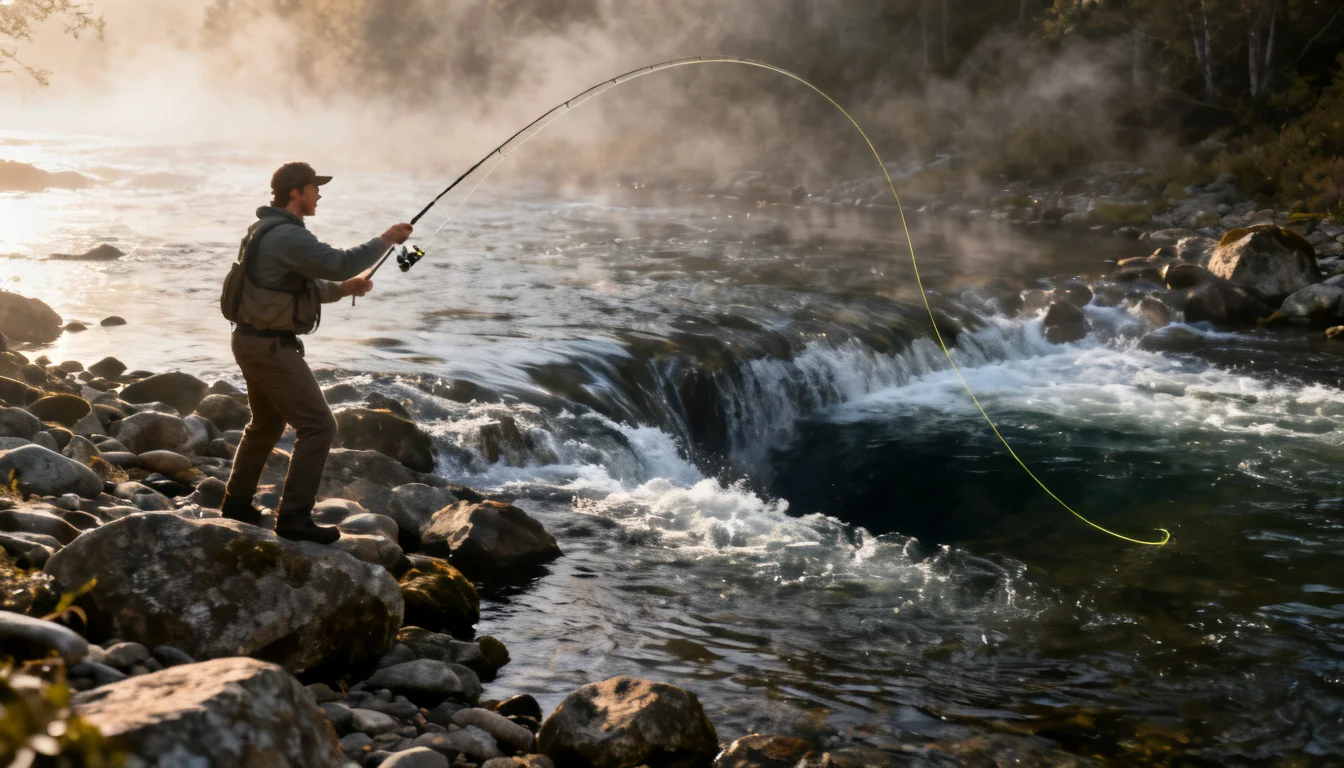
Walk the water — the classic river approach. You move upstream along the bank, casting to each seam, eddy, and hole as you come to it, then moving on. This matches how a river works: most stretches hold a few fish in a few pockets, and covering water finds them. Walk-and-fish pays off on riffly stretches with scattered pockets and on spring mornings when fish are spread out.
Camp on a spot — when you find a true honey hole, fish it thoroughly before leaving. Deep holes, log jams, and undercut banks often hold several fish in one small area. Work the lie from every angle: cast upstream and drift through it, then across, then from downstream if you can. If a hole produced one fish, fish it again — river fish often stack in the same lie.
A practical rule: give each pocket about 15 minutes and a few presentation changes. For river fishing for beginners, the best plan is to start stationary on one promising hole — it builds your drift control and confidence — then graduate to walking the bank once you can read the water on the move.
River Fishing Gear & Tactics
Rod & reel: a 6'6"-7' medium-fast rod with a spinning reel (2500-3000 size) handles most river fishing. Line: 6-10 lb mono/fluorocarbon for trout and smallmouth, 10-15 lb for catfish.
The best river fishing lures fall into three families: inline spinners, crankbaits, and jigs. Inline spinners cover seams and riffle edges; shallow crankbaits work along banks and over gravel; jigs bounced through holes imitate crawfish, the river bass's favorite meal.
Tactics that work in current:
- Drift fishing: cast upstream at a 45° angle and let the current carry your bait naturally through the holding water. No retrieve needed — the river does the work.
- Bounce the bottom: let a jig or bait drag along the bottom through holes and seams. This matches how crawfish and nymphs move.
- Fish the seams: cast just upstream of a seam and let the bait swing through the calm side where fish sit.
- Use enough weight: in fast water, add enough split shot to keep your bait near the bottom — but not so much it snags instantly.
Live bait winners: hellgrammites, crawfish, and nightcrawlers are river classics; drift them through holes and seams.
Common River Fishing Mistakes
1. Fishing the current instead of the seams — fish hold in slack water beside the flow, not in it.
2. Casting downstream — you spook the fish and fight the current. Cast upstream and drift down.
3. Under-weighted rigs — in fast water, light bait bounces on the surface instead of reaching fish.
4. Wading carelessly — slippery rocks and changing depth are real hazards. Wade slowly, use a wading staff in big water.
5. Fishing one spot too long — rivers are dynamic; if a hole isn't producing in 15 minutes, move to the next one.
How to Fish a River FAQ
Where do fish hold in a river?
Fish hold in slack water beside the current: current seams, eddies behind rocks, deep holes, and undercut banks. They position there to intercept drifting food while conserving energy.
Should I cast upstream or downstream?
Cast upstream at an angle and let the current drift your bait naturally through the holding water. This presents bait the way food arrives — the most natural approach.
What's the best bait for river fishing?
Live hellgrammites, crawfish, and nightcrawlers are proven river baits. Inline spinners, crankbaits, and jigs work well for smallmouth and trout; stink baits and cut bait work for catfish — see our how to catch channel catfish guide for the rigs and night setups.
Do I need waders to fish a river?
Not always — bank fishing works on many rivers, especially at pools, bends, and bridges. Waders let you reach the best lies and wade seams, but start from the bank and learn the water first.
What's the best time of day for river fishing?
Low light — dawn and dusk — is prime time. Trout also feed actively during hatches; catfish bite best at night. Bright midday sun slows most river fish.
How do I fish deep holes in a river?
Drift natural bait (crawfish, minnows, worms) through the hole on a weighted rig, or vertical-jig from a boat or kayak if you have one. Big fish in holes are often deep and lazy — keep bait near the bottom and move slowly.
The Bottom Line
River fishing tips in one line: find the seams, eddies, and holes where fish rest out of the current, then drift your bait through them at their pace. Walk the bank to cover water, camp on the honey holes, and keep your presentations moving with the flow.
Rivers reward patience and reading water more than any other freshwater. Learn the structure, respect the current, and every bend becomes a new chance at the biggest fish of the year.