Brown Trout: Complete Species Guide
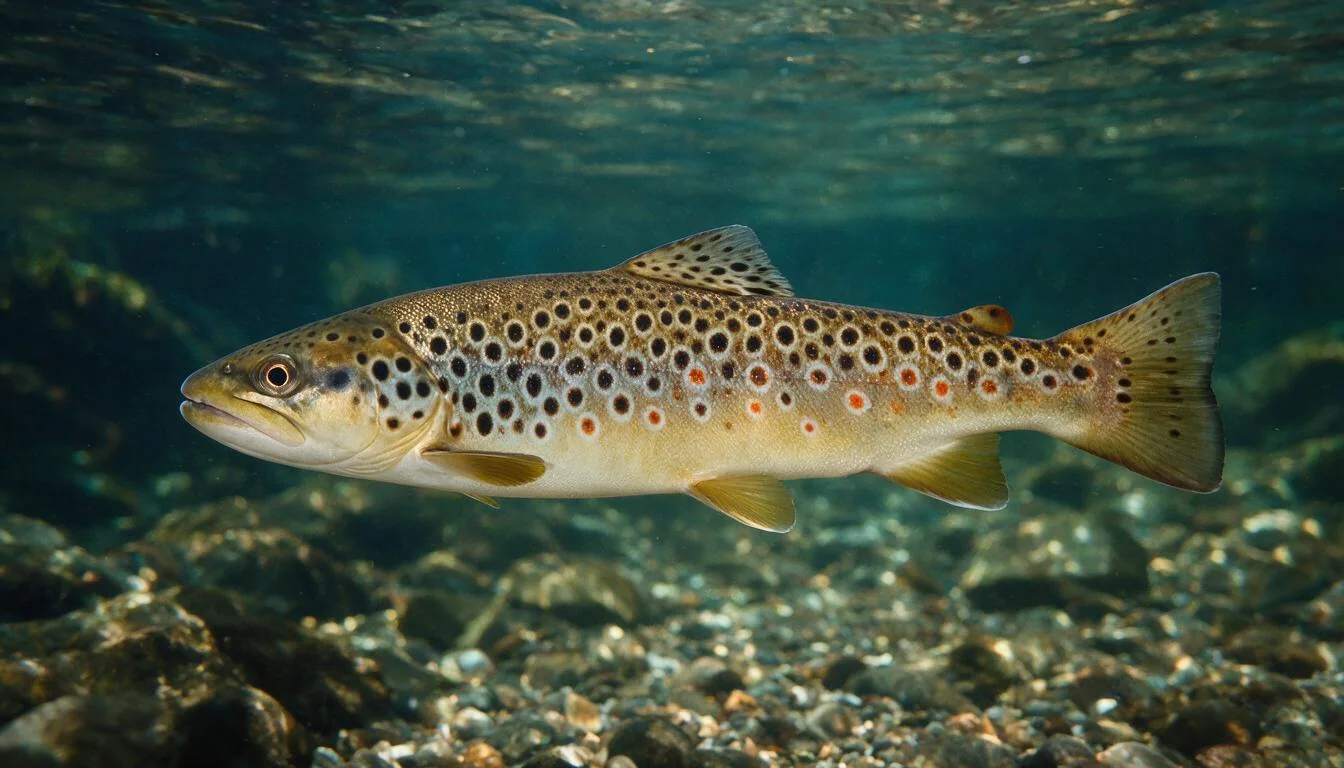
The brown trout (Salmo trutta) is the smartest fish in American trout water — a golden-brown import from Europe that has earned a reputation no other trout can match. Anglers call it the "fish of ten thousand casts," and for good reason.
Brown trout are spooky, selective, and famously nocturnal, which is exactly why catching one is such a badge of honor.
This complete brown trout guide covers identification, behavior, where they live in the US, what they eat, how big they get, and the best ways to catch them. New to the sport? Start with our fishing for beginners guide, then come back to meet the trout that humbles everyone.
Why Brown Trout Are America's Wariest Trout
Brown trout were first brought to the United States from Germany in 1883, stocked into Michigan's Pere Marquette River. More than 140 years later, they are the only trout on the continent that thrives as a wild, self-sustaining fish almost everywhere it was introduced.
What makes the brown different from rainbows and brook trout is temperament. Rainbows smash a lure out of pure aggression, and brook trout strike out of simple hunger. A big brown trout treats every offering with suspicion — it watches, waits, and disappears.
Decades of fishing pressure have selected for the most cautious fish, and today's wild browns spook at a shadow, refuse anything that looks suspicious, and feed mostly under the cover of darkness.
That caution is precisely why the species is so loved. There is no shortcut to a trophy brown trout. You have to read the water, present your fly or lure naturally, and out-think a fish that has seen it all.
Brown Trout Identification: How to Tell Them Apart
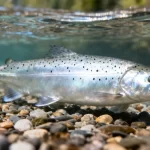
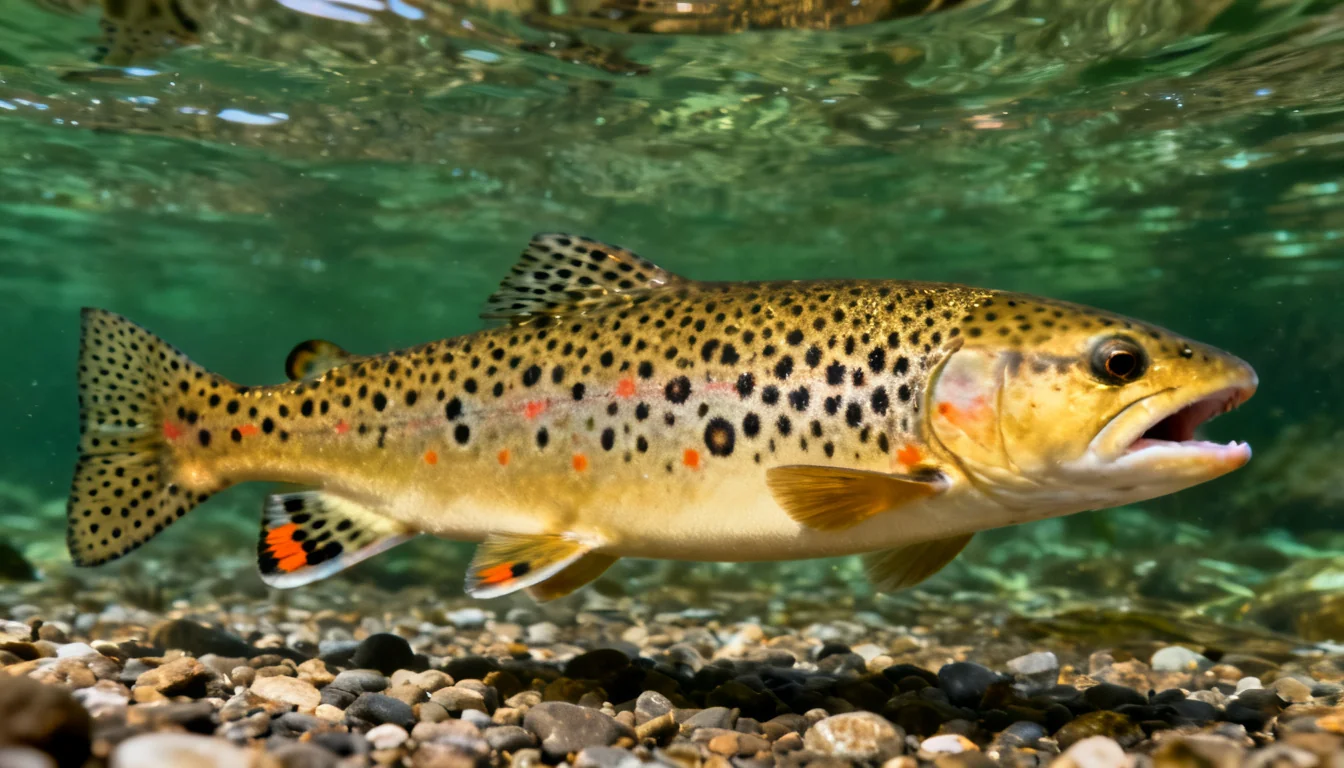
Brown trout identification is straightforward once you know the two signature marks: black spots ringed with pale halos and red-orange spots scattered along the sides. No other North American trout has that combination.
Key features:
- Golden-brown to olive back fading to a cream or yellow belly — no pink band (that's the rainbow's trademark)
- Black spots in pale halos over the back and upper sides — each dark spot surrounded by a lighter ring
- Red-orange spots on the sides, often with pale halos of their own
- Square tail with few or no spots (rainbows have a slightly forked tail covered in spots)
- Large mouth with fine teeth on the roof of the mouth (vomerine teeth)
Look-alikes — the two most common mix-ups:
| Feature | Brown Trout | Rainbow Trout | Brook Trout |
|---|---|---|---|
| Body color | Golden-brown, cream belly | Silver-olive with pink band | Dark olive, worm-like markings |
| Spots | Black spots in pale halos + red-orange spots | Black spots, no halos, on back + tail | Red spots with blue halos |
| Fins | Plain, few spots | Plain, spotted | White leading edges on lower fins |
| Tail | Square, few or no spots | Slightly forked, fully spotted | Slightly forked, faint spots |
If you see a trout with a pink stripe and a spotted tail, it's a rainbow — for the full rundown on that species, check our rainbow trout fishing guide. If the fish is golden-brown with haloed black spots and orange spots, you've found your brown trout.
Brown Trout Behavior & Habits
Brown trout behavior revolves around two things: cool water and caution. They are most active between 50-65°F (10-18°C), and their feeding patterns track temperature closely:
| Water Temp | Brown Trout Behavior |
|---|---|
| < 45°F (7°C) | Slow and deep; winter fishing on lakes and tailwaters still works |
| 50-65°F (10-18°C) | Peak feeding zone — most aggressive, best fishing |
| 65-70°F (18-21°C) | Slowing down; hold in deep pools, shade, and undercut banks |
| > 70°F (21°C) | Stressed, barely feeding; many rivers close trout season |
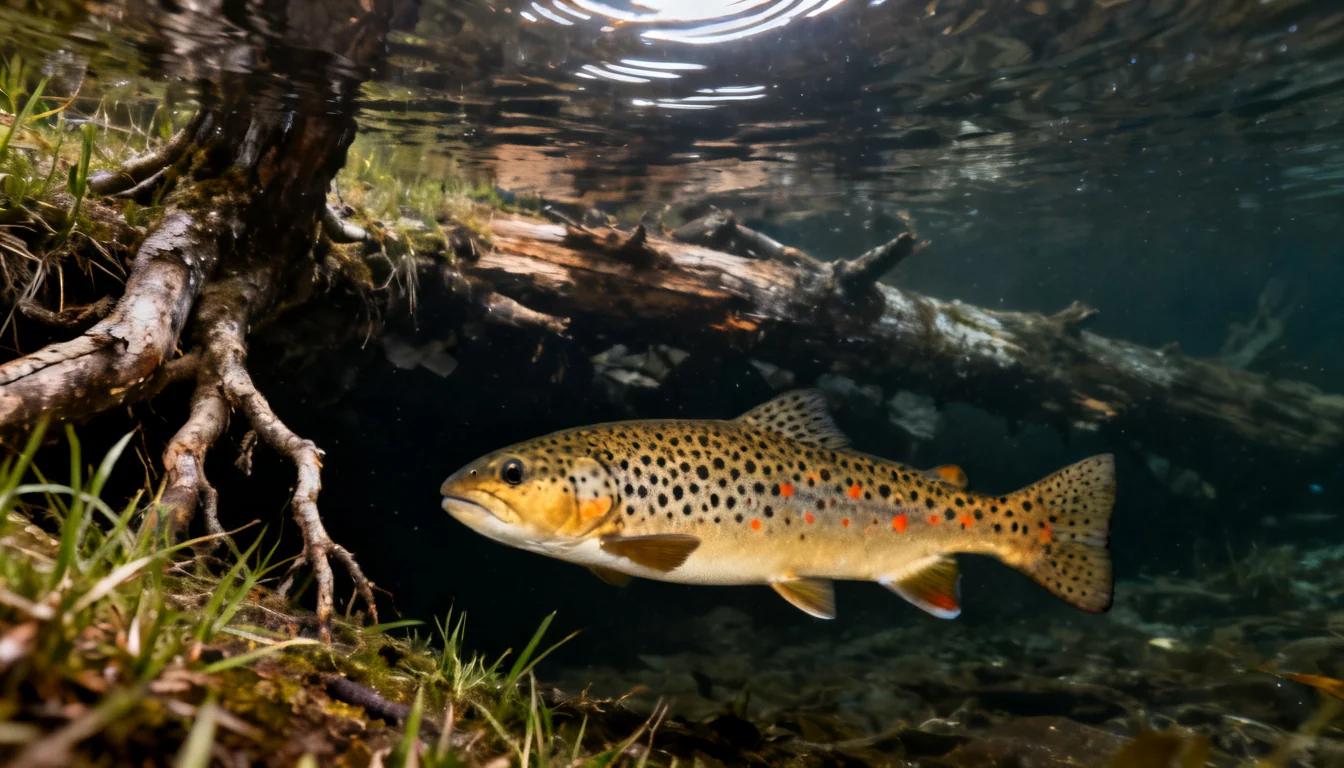
Nocturnal by nature. Small browns feed during the day like other trout, but fish over 18 inches do most of their eating after dark. On bright summer days, big browns tuck under logjams and cut banks; when the sun drops, they slide into shallow water to hunt. This is why serious brown trout anglers fish until midnight with mouse patterns and big streamers.
Fall spawners. Unlike rainbows, which spawn in spring, brown trout spawn in fall — roughly October through December, triggered when water temperatures fall into the mid-40s (°F). Females dig nests (redds) in gravel riffles, and the big fish become suddenly catchable as they defend their spawning areas.
Long-lived and cannibalistic. Brown trout routinely live 5-10 years and can reach 15-20 in rich waters — far longer than a stocked rainbow. The oldest fish are also the biggest eaters: large browns are cannibals that prey on smaller trout, which is why big-streamer patterns work so well on trophy waters.
Brown Trout Habitat & US Distribution
Brown trout habitat in the US is broader than any other trout's. Because they tolerate slightly warmer and more productive water than brook trout, browns thrive in streams, rivers, and lakes from the Great Lakes to the Ozarks.
Where they're found:
- Upper Midwest — Michigan's Pere Marquette and Au Sable rivers, plus the Driftless Area spring creeks of Wisconsin and Minnesota, hold some of the best wild brown trout water in the world
- Northeast — New York, Pennsylvania, and Vermont freestone streams and limestone creeks (Letort Spring Run, Battenkill)
- Appalachians & Ozarks — Virginia, Tennessee, and the famous tailwaters of Arkansas and Missouri (White River, Little Red River, Taneycomo)
- Rockies — Montana, Wyoming, and Idaho rivers hold giant browns, with the Missouri River and Madison River leading the way
- Great Lakes tributaries — Michigan and New York streams host fall runs of lake-grown browns pushing 10-20 lb
Where they hold within a water body. Brown trout are cover fish. By day, look for undercut banks, logjams, bridge pilings, deep pools, and shaded water — anywhere a wary fish can hide with access to current. At dusk and after dark they move into shallow riffles and flats to feed. In lakes and big rivers, browns suspend along the cool, oxygen-rich band or hold near current breaks. For the full breakdown of reading moving water, see our guide on how to fish a river.
What Do Brown Trout Eat?
Wondering what brown trout eat? Brown trout are opportunistic predators with the most varied menu of any trout. The list explains almost every fly and lure pattern ever invented for them:
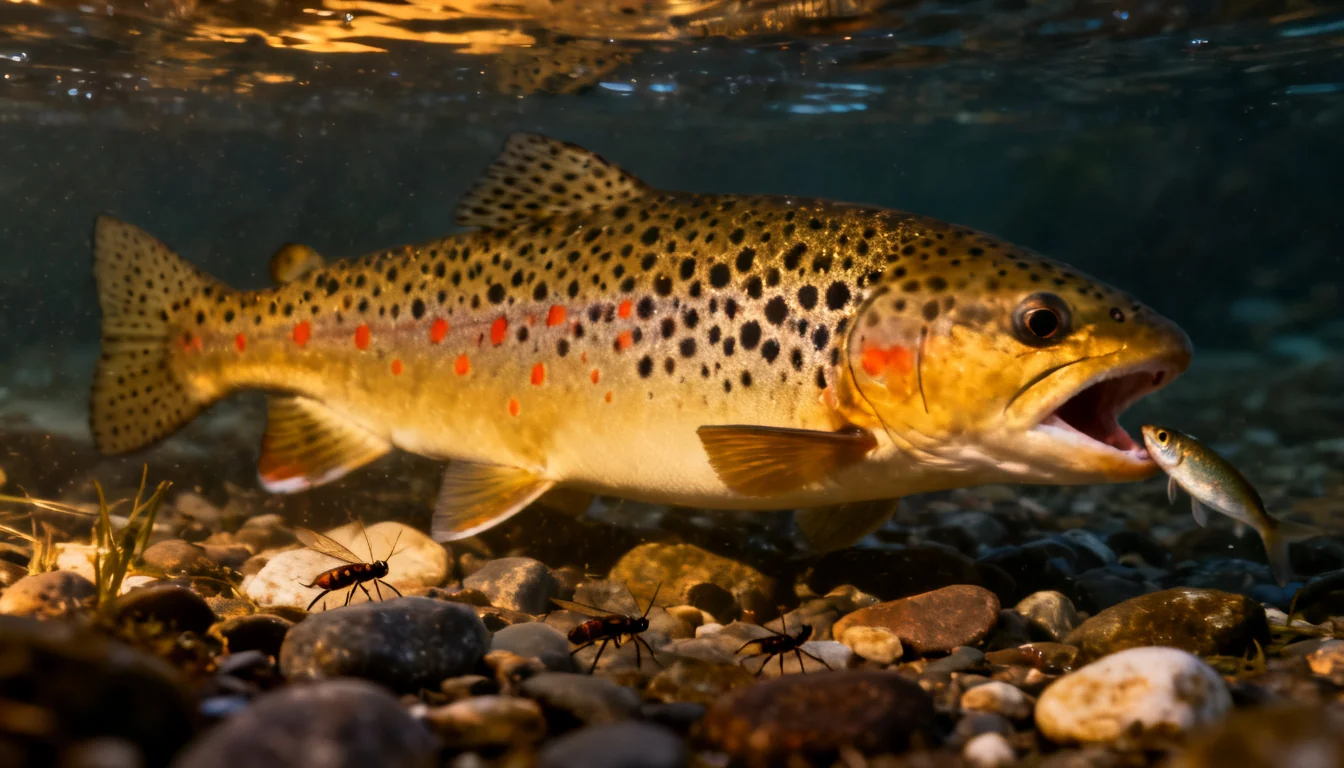
- Aquatic insects — mayflies, caddisflies, stoneflies, and midges in every life stage: nymphs on the bottom, emergers in the film, adults on the surface
- Terrestrial insects — grasshoppers, ants, and beetles that blow into the water, especially on windy summer days
- Small fish — minnows, sculpins, darters, and young trout; the staple of every trophy brown
- Crayfish — a favorite of big river and lake browns
- Fish eggs — browns eagerly eat salmon and trout eggs during fall spawning runs
- Mice, voles, and shrews — the famous night menu; big browns hunt small mammals that swim or fall into the water
How size changes the menu: a 6-inch brown eats midges and small nymphs; a 14-inch fish eats caddis, crayfish, and the occasional minnow; a 20-inch trophy hunts baitfish, young trout, and mice. Match your offering to the fish you're after — small flies for small fish, big streamers for the cannibals.
Best Ways to Catch Brown Trout
The complete tactics are in our dedicated guide — How to Catch Brown Trout — but here's the short version:
- Fly fishing is the classic method: nymphs under an indicator year-round, dry flies during hatches (hopper patterns in summer are deadly), and streamers — Woolly Buggers, Muddler Minnows, and sculpin patterns — for big fish
- Mouse patterns after dark are the brown trout specialist's secret: fish them on summer nights along banks and logjams
- Spin fishing works too: inline spinners and small spoons in gold or silver, plus jerkbaits and minnow imitations for trophy fish
- Live bait — nightcrawlers, minnows, and salmon eggs drifted naturally — remains the most reliable way to catch stocked and pressured browns
- Best windows: dawn, dusk, and night; overcast days; and fall, when pre-spawn browns feed aggressively
Brown Trout Size: How Big Do They Get?
Typical size: most brown trout caught by anglers run 10-18 inches. Stocked fish average 8-12 inches; wild river fish commonly reach 14-18 inches, with 20-inchers considered a great catch in most streams.
Growth depends on food and water:
- Freestone streams: slow growth, but 16-20 inch wild fish are common on rich rivers like the Au Sable
- Limestone and tailwater fisheries: the giants — the White River system and Great Lakes tributaries routinely produce fish over 10 lb, with 20 lb browns landed most years
- Great Lakes lake-run browns: 10-20 lb fish are taken every fall in Michigan and New York tributaries
Records:
- World record (IGFA all-tackle): the heaviest verified brown trout exceeded 40 lb — the true giants of the species come from Europe's biggest lakes and from New Zealand
- US benchmark: 5 lb is a trophy in most states; 10 lb is a fish of a lifetime almost anywhere
- Arkansas state record: 40 lb 6 oz — Rip Collins, Little Red River, May 1992, one of the most famous brown trout ever landed in North America
A 20-inch brown trout fights like a fish twice its size — and disappears like one too. That's the deal with the species: the best fish are also the hardest to fool.
Are Brown Trout Good to Eat?
Brown trout are excellent eating — firm, flaky, and mild, with flesh ranging from white to pinkish-orange depending on diet. Wild fish from cold, crustacean-rich lakes take on a salmon-like pink color and richer flavor.
Best cooking methods: pan-fried whole or filleted, grilled, baked, or smoked. A 10-14 inch fish is perfect for the pan; bigger fish are better filleted or smoked. Brown trout is a favorite of camp cooks because it needs almost nothing — butter, salt, lemon, and a hot pan.
One caution: as with any large predator fish, check local consumption advisories for big browns from large lakes and tailwaters, which can accumulate contaminants. Many anglers practice catch-and-release on trophy fish to keep the big breeders in the water.
Brown Trout FAQ
Are brown trout hard to catch?
Yes — brown trout are widely considered the most difficult trout to catch in North America. They spook easily, feed selectively, and big fish turn nocturnal. The same traits make them the most rewarding: an angler who consistently catches browns has mastered stealth, natural presentation, and reading water.
Do brown trout bite at night?
They bite best at night. Fish over 18 inches do most of their feeding after dark, especially in summer, when they leave deep cover to hunt shallow water. Mouse patterns, big streamers, and large minnow imitations fished slowly along banks and logjams produce trophy browns that refuse everything during the day.
Do brown trout eat mice?
Yes — big brown trout regularly eat mice, voles, and shrews that fall into the water or swim across it. This is why mouse patterns (deer-hair mice, Morrish Mice) exist and why they're so effective: a mouse imitation skated across a dark pool is one of the most exciting ways in fly fishing to catch a monster brown.
How long do brown trout live?
Most wild brown trout live 5-10 years, and fish in rich waters can reach 15-20 years — far longer than rainbows or brook trout. Long life is exactly why they grow so large: a 20-inch brown is usually a decade old, and the biggest fish are the oldest, wariest survivors.
When do brown trout spawn?
Brown trout spawn in fall — roughly October through December in most of the US, triggered when water temperatures drop into the mid-40s (°F). Females dig redds in gravel riffles, and males compete for position. This is a key difference from rainbow trout, which spawn in spring, and it's why fall is prime time for trophy browns.
The Bottom Line
The brown trout is the chess master of American trout fishing: a golden, halo-spotted import that outsmarts anglers for a decade before reaching trophy size. Learn to identify it by its black spots in pale halos and red-orange spots, respect its nocturnal habits, and fish the cover — undercut banks, logjams, deep pools.
Do that, and you'll earn the hardest-won fish in freshwater. When you're ready to turn this knowledge into fish on the line, the how to catch brown trout guide covers the gear, flies, and stream tactics in full detail.