Channel Catfish: The Complete Species Guide
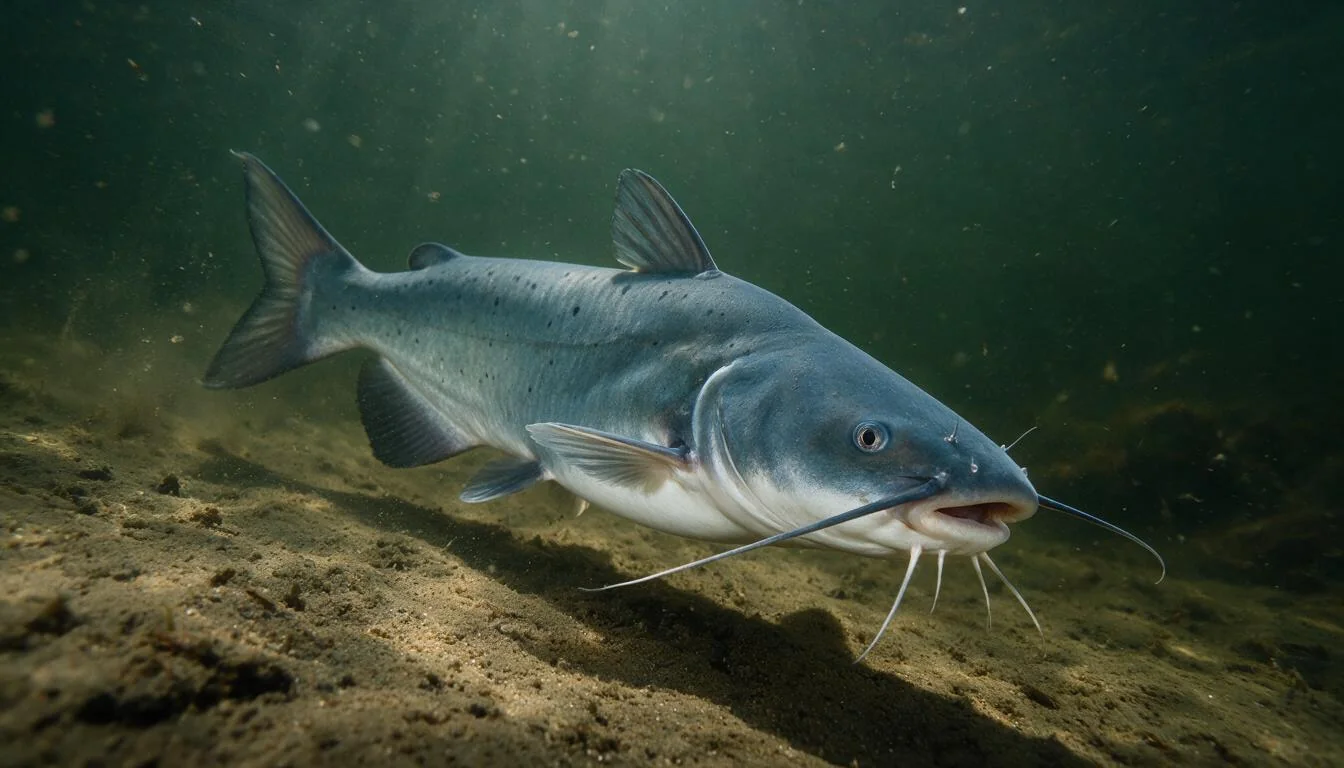
Ask any American angler which catfish they catch most often, and the answer is almost always the same: the channel catfish (Ictalurus punctatus). It swims in more rivers, lakes, and ponds across the United States than any other catfish.
It bites eagerly on baits as humble as chicken liver, and it fights hard enough to be fun for kids and experts alike. This complete channel catfish guide covers identification, behavior, where they live, what they eat, how big they get, and the best ways to catch them.
Why Channel Catfish Are America's Most Popular Catfish
Channel cats earned their title as the country's #1 catfish for four simple reasons:
- They're everywhere. Native to the Mississippi River basin and the central and southern states, they have been stocked across the country — from California reservoirs to Florida lakes to Great Lakes tributaries.
- They're eager biters. Unlike wary trophy fish, channel cats will hit a stink bait, a piece of cut shad, or a wad of worms any night of the week.
- They're scrappy fighters. A channel cat on light tackle bulldogs for the bottom, peels line in short powerful runs, and rarely gives up early.
- They're delicious. Firm, white, mild fillets are a staple of fish fries from Missouri to Alabama.
New to fishing? Start with our fishing for beginners guide, then come back — channel cats are one of the easiest fish for newcomers to actually catch.
Channel Catfish Identification: How to Tell Them Apart
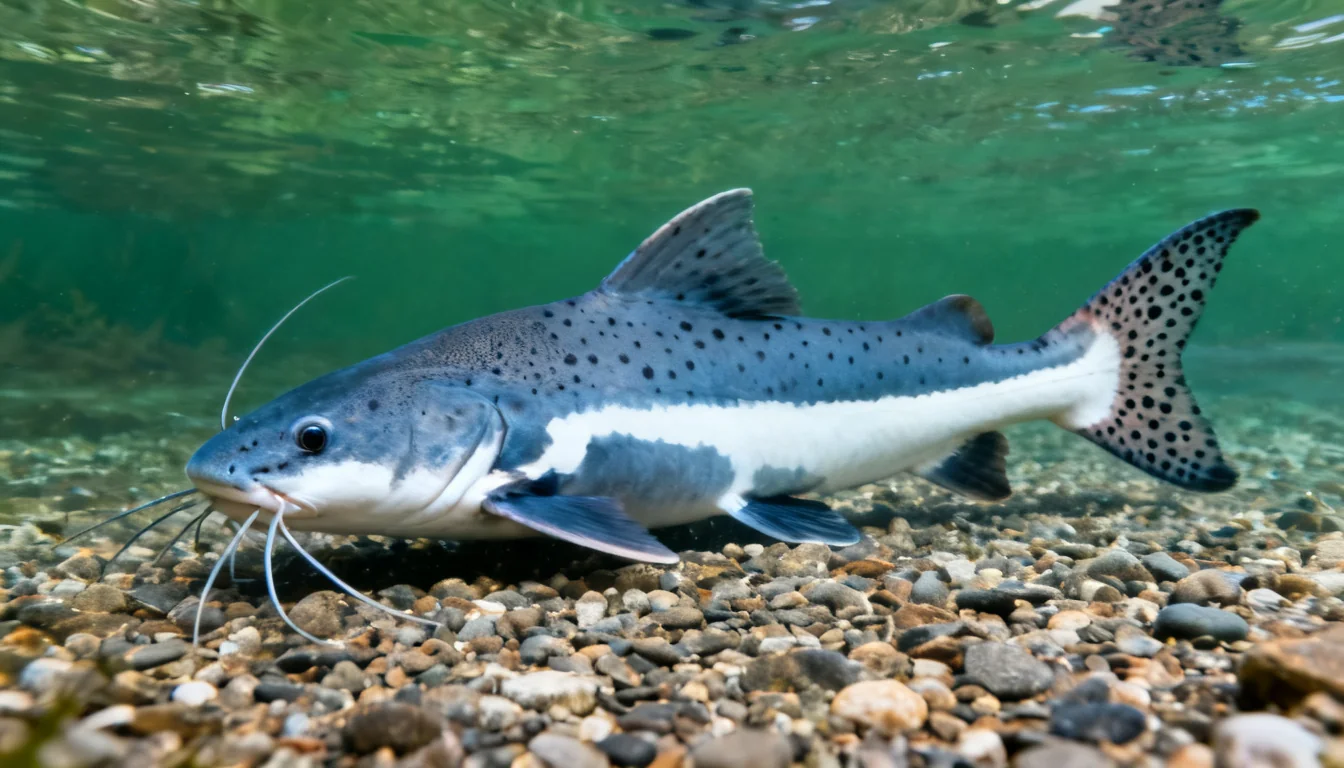
Channel catfish identification is straightforward once you know the key features. They are the classic "catfish" shape: a scaleless, smooth-bodied fish with a broad head, a deeply forked tail, and four pairs of whisker-like barbels around the mouth (eight barbels total).
Key features:
- Deeply forked tail — the fastest way to separate them from flatheads; the "channel" in the name comes from the fish's habit of holding in the deeper channels of rivers and streams, not from the tail
- Dark spots — young fish are covered in black spots on a slate-blue to olive-gray back; the spots fade as the fish grows and are often gone on old trophy fish
- White to silvery belly, with no scales anywhere on the body
- Rounded anal fin with 24–29 rays (count the soft rays to settle any argument)
- Barbels — a long pair at the corners of the mouth, two shorter pairs on the chin, and one small pair at the nostrils
Look-alikes — the two catfish people most often confuse with channel cats:
| Feature | Channel Catfish | Blue Catfish | Flathead Catfish |
|---|---|---|---|
| Tail | Deeply forked | Deeply forked | Nearly square, slightly notched |
| Body color | Slate-blue to olive with dark spots (young) | Blue-gray, no spots | Mottled brown/yellow, blotched |
| Anal fin | Rounded, 24–29 rays | Straight-edged, 30–36 rays | Rounded, 24–29 rays |
| Lower jaw | Shorter than upper | Shorter than upper | Protrudes past the upper |
| Typical table size | 1–5 lb | 5–20 lb (grows much bigger) | 3–20 lb |
The quickest field check: spotted body with a forked tail = channel catfish. No spots with a forked tail = blue catfish. A square-ish tail and a protruding lower jaw = flathead.
Channel Catfish Behavior & Habits
Understanding channel cat behavior explains why anglers do most of their fishing after dark.
Nocturnal bottom-dwellers. Channel cats are primarily night feeders that hug the bottom during the day. They move into shallower water to feed at dusk and are most active between sunset and midnight — the reason night fishing for catfish is a tradition on every big river in the country.
Built for the dark. A channel cat's skin is covered in taste buds — the whole body can "taste" the water. Its barbels are packed with chemoreceptors, and its eyes are adapted for low light. It locates food by smell and taste long before it sees it, which is why strong-smelling baits work so well.
Temperature-driven. Channel cats are warm-water fish that feed most aggressively when water temperatures sit between 70°F and 85°F — roughly late spring through early fall across most of the country. They slow down dramatically below 50°F, but they still feed year-round, which makes them a dependable winter target in southern states.
Social and curious. Unlike solitary flatheads, channel cats often travel and feed in loose groups. Find one, and there are usually several more in the same hole — one of the reasons a good catfishing spot keeps producing all season.
Channel Catfish Habitat: Where They Live in the US
Channel cats are native to the Mississippi River basin, the central United States, and the Gulf Coast, from southern Canada down to Texas and Florida. Decades of stocking have spread them into nearly every state, and they now thrive in everything from giant reservoirs to small farm ponds.
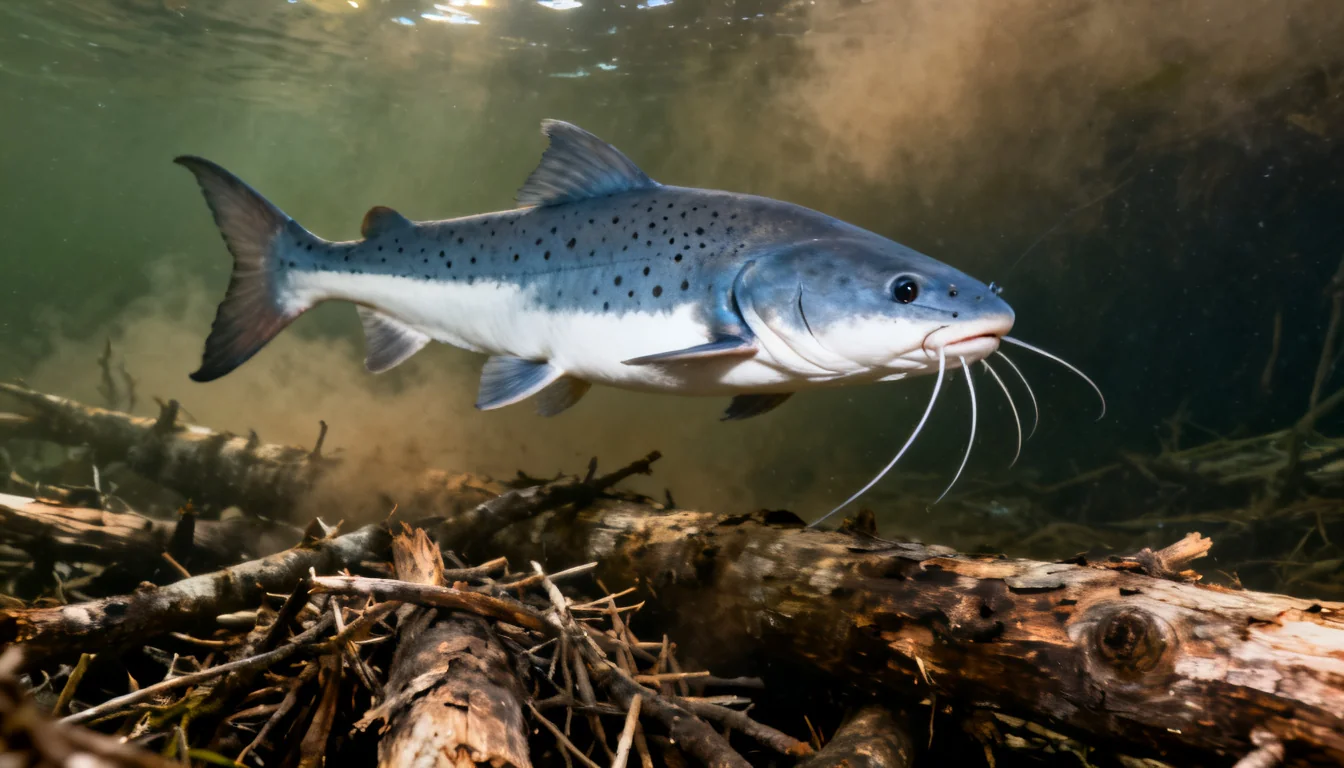
Where they live within a water body: channel catfish habitat always includes a few constants — deep water nearby, some kind of cover, and current or moving water when available:
- Deep holes — in rivers, they stack up in the deepest holes, especially below riffles and gravel bars
- Logjams and brush piles — submerged timber is prime holding cover, both day and night
- Undercut banks and tree roots — shaded banks with root tangles hold fish all day
- Below dams and wing dams — the turbulent, oxygen-rich water below dams is a classic channel cat spot
- River bends and current seams — they sit where fast water meets slow water, waiting for food to wash by
- Creek mouths in reservoirs — where a creek feeds a lake, the current and food attract catfish
In lakes and ponds, channel cats relate to the deepest structure available: old creek channels, drop-offs, and flooded timber.
The universal rule: deep water during the day, shallow flats and banks after dark. See our guide on how to catch rainbow trout for a different kind of river fishing — catfish and trout live at opposite ends of the water column and the temperature scale.
What Do Channel Catfish Eat?
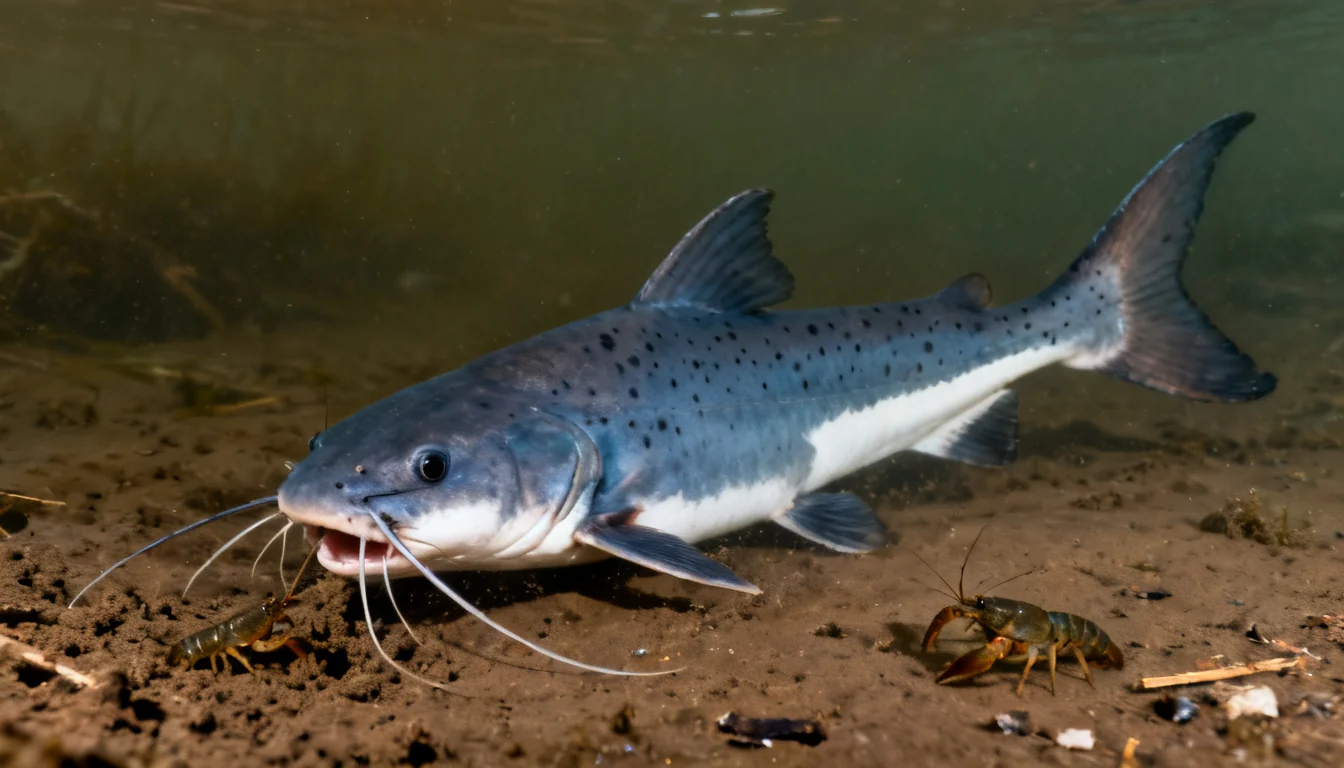
Wondering what do channel catfish eat? The short answer: almost anything. Channel cats are true omnivores and scavengers, which is exactly why they're so easy to catch with the right bait.
Natural diet:
- Insects and aquatic larvae — mayflies, caddisflies, dragonfly nymphs; the main food of small channel cats
- Crayfish — a staple in rivers and rocky lakes
- Small fish and fish eggs — shad, minnows, and the eggs of spawning game fish
- Worms and leeches — easy pickings after rains
- Mollusks and freshwater mussels
- Plant matter, seeds, and algae — they eat vegetation far more than most anglers realize
- Carrion — dead fish and other animals are an important part of the diet, which is why dead, smelly baits work so well
Because their whole body can taste the water, channel cats home in on strong, oily, smelly baits that most other fish ignore. That's the biology behind the classic catfishing menu: chicken liver, cut shad, stink bait, shrimp, and nightcrawlers.
Channel Catfish Size: How Big Do They Get?
Typical size: Most channel cats caught by anglers weigh 1–5 lb and measure 12–24 inches. In most states, a 10-pound channel cat is a genuine trophy, and a 20-pounder is a fish of a lifetime.
Growth depends on where they live:
- Southern waters (TX, LA, MS, AL): fast growth, reaching 5 lb in 5–7 years; trophy class is realistic
- Midwest rivers (MO, IL, IA, KS): great numbers of 2–8 lb fish, with giants in the Mississippi and Missouri systems
- Northern waters: slower growth but long-lived fish; 30-inch cats are possible
- Small ponds: usually 1–3 lb, but pond fish often grow quickly when food is abundant
Records:
- World record (IGFA): 58 lb — caught by W.B. Whaley in the Santee-Cooper Reservoir, South Carolina, in 1964. More than 60 years later, it still stands
- Missouri's state record: well over 30 lb, a reminder that big river systems grow big cats
- Texas trophy class: a 10-pounder earns bragging rights in most Texas waters
A good rule of thumb: a 10-pound channel cat typically runs 28–30 inches, and a 20-pounder pushes 35. Bigger fish have bigger home ranges and are almost always caught at night on big baits fished on the bottom.
Best Ways to Catch Channel Catfish
Channel cats are one of the easiest fish in America to catch deliberately, and the tactics are the same from the Missouri River to a Florida farm pond: bait on the bottom, fished near structure, most often after dark.
Chicken liver, cut shad, stink bait, and worms all work; circle hooks and enough weight to hold bottom are the only real requirements.
The complete step-by-step system — bottom rigs, float fishing, bait selection, night fishing setup, and common mistakes — lives in our dedicated companion guide: How to Catch Channel Catfish.
Are Channel Catfish Good to Eat?
Yes — channel cats are among the best-eating freshwater fish in America. The meat is firm, white, mild, and almost never fishy, which is why the Friday night fish fry is a southern institution.
Best cooking methods: deep-fried fillets (the classic), blackened, grilled, or broiled. Most anglers skin the fish rather than fillet it — the skin is thick and tough, and the meat underneath is pure white.
Remove the dark red strip of fat along the lateral line (the "mud vein") before cooking — it can carry a muddy flavor, especially in larger fish from warm water.
Small-to-medium channel cats (1–4 lb) from clean, moving water are the best eating.
Channel Catfish FAQ
What is the lifespan of a channel catfish?
Channel cats typically live 12–14 years, with many reaching 20. The oldest recorded wild channel catfish lived more than 40 years, usually in northern waters where growth is slow.
Do channel catfish bite during the day?
Yes, but they're much more active at night. During the day, fish deep holes, logjams, and shaded structure, and use baits with strong scent to overcome the fact that the fish are resting, not roaming.
What is the best bait for channel catfish?
Chicken liver, fresh cut shad or other oily fish, stink bait (prepared dough baits), nightcrawlers, shrimp, and crawfish all catch channel cats. Stink and cut baits are the top producers on big rivers; worms and liver are best for ponds and smaller lakes.
Are channel catfish bottom feeders?
Mostly, yes. They spend the day on the bottom and feed along the bottom at night, but they will suspend to chase baitfish and will take a bait fished under a bobber at mid-depth, especially in reservoirs.
When do channel catfish spawn?
Channel cats spawn in late spring and early summer, once water temperatures climb into the low 70s°F. They nest in dark, enclosed cavities — undercut banks, hollow logs, and debris piles — and the male guards the eggs until they hatch. That's also why the weeks around the spawn are prime daytime fishing.
What is the difference between a channel catfish and a blue catfish?
The fastest field check: channel cats are spotted, blue cats are not (they're spotless blue-gray, with a straight-edged anal fin that has 30–36 rays).
The bigger difference is growth — blue catfish get enormous, with 50-pounders landed every year and a world record above 140 lb, while channel cats rarely top 20–30 lb. Blues also school in big rivers and key on live fish, which is why fresh cut shad is the classic blue cat bait.
The Bottom Line
The channel catfish is the most widespread, most cooperative, and most delicious catfish in the United States. Learn to identify it by its forked tail and spotted body, look for it in deep holes and logjams, fish strong-smelling baits on the bottom — and go at night. With those four pieces, catfish fishing almost always means catching.
Ready to rig up? Slip-sinker, circle hook, smelly bait, after dark — you now have the whole system. And if you want to expand your freshwater game, the rainbow trout offers a completely different kind of river fishing.