Freshwater Aquarium for Beginners: Setting Up Your First Tank, Step by Step
Freshwater aquarium beginners share one story. You buy a tank, fill it, and add fish the same week. A month later you're scrubbing green glass and burying dead fish. It doesn't have to go that way.
This guide walks through a freshwater aquarium setup in the order that actually matters — tank, equipment, cycling, water quality, and first fish — so your first tank starts stable instead of stressful. If you're new to the water side of fish in the wild too, our complete fishing for beginners guide covers the other half of the story.
Aquarium Tank Setup: Size, Location, and Stand
The most common beginner mistake isn't buying the wrong filter. It's buying a tank that's too small. Small tanks look easier, but water chemistry swings fast in 5 or 10 gallons — and swings kill fish.
A 20-gallon long tank is the best first aquarium for most people: big enough to stay stable, small enough to fit a standard stand, and cheap to light and heat.
Bigger tanks are actually easier to keep than small ones. A 40-gallon tank holds its temperature and water chemistry far better than a 10-gallon tank, because there's more water to dilute mistakes. If you have the space, start at 20 gallons and work up from there.
Where the tank sits matters almost as much as its size:
- Keep it out of direct sunlight. Sunlight grows algae fast and can overheat the water in summer.
- Avoid heat vents and radiators, which swing temperature from one side of the day to the other.
- Use a proper stand, not a shelf. A filled 20-gallon tank weighs around 225 pounds; a filled 55-gallon tank weighs well over 600. A level, solid stand is not optional.
- Leave room behind the tank for the filter, heater, and cleaning access.
For a first aquarium, skip the fancy extras. Spend your money on the tank, a good filter, and a heater — you can add plants and hardscape later, once the tank is running. The good news is that aquarium tank setup is mostly one evening of work, and then the wait begins.
Equipment Checklist: Filter, Heater, Lighting, Substrate
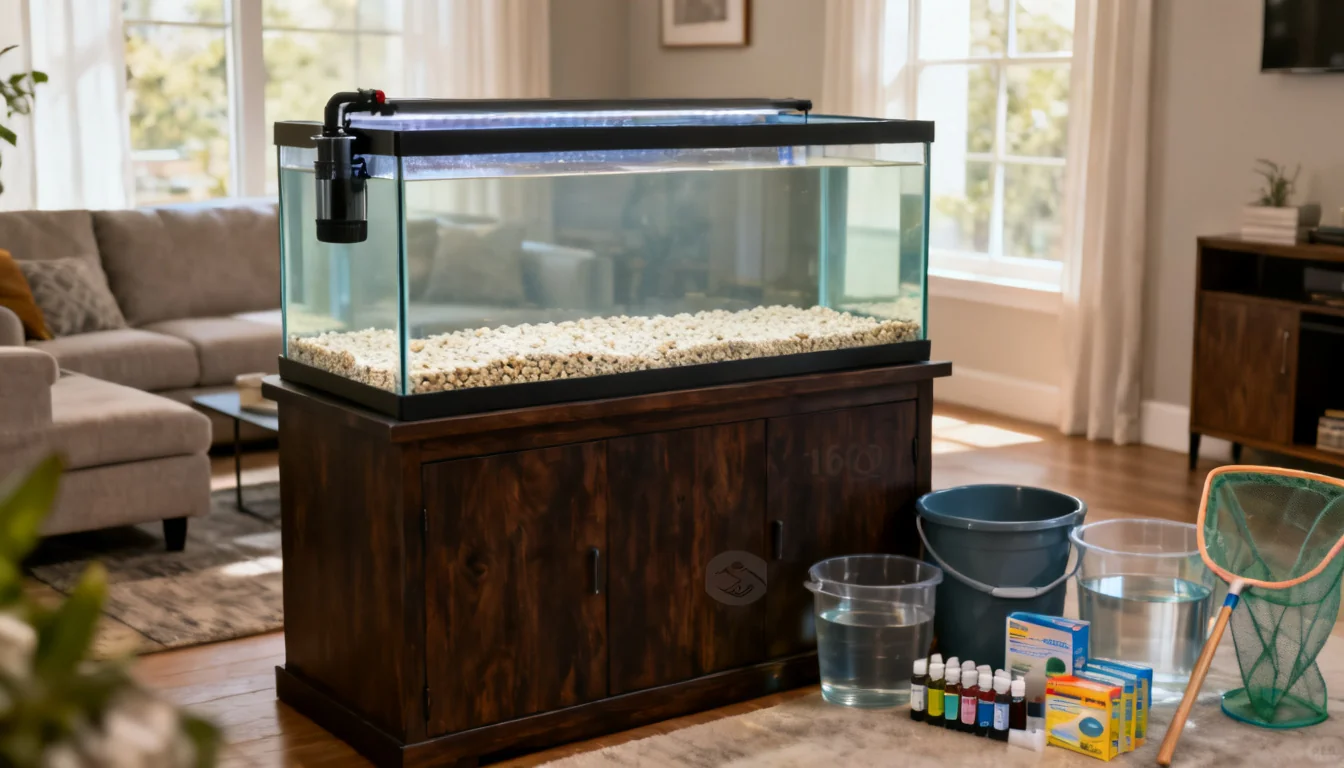
A basic freshwater aquarium setup needs seven things: tank, stand, lid, filter, heater, thermometer, and light. Everything else is optional.
- Filter. A hang-on-back filter is the standard choice for a first tank; sponge filters are cheap, gentle, and bulletproof for small tanks. Match the filter to the tank volume — buy one rated for a bigger tank than you own, not a smaller one.
- Heater. Most beginner community fish are tropical and need water between 74°F and 80°F. A rough rule is 3 to 5 watts per gallon, so a 20-gallon tank usually takes a 100-watt heater. Always pair the heater with a thermometer — heaters fail, and the thermometer is the only way to catch it early.
- Light. A basic LED light is enough for a fish-only tank. Live plants need a stronger light and a timer for a consistent 8 to 10 hours a day.
- Substrate. Rinse gravel or sand thoroughly before it goes in — dust from new substrate clouds the water for days. Wash it in a bucket until the water runs clear.
- Water conditioner. Tap water contains chlorine and often chloramine, both toxic to fish. A conditioner that removes both is mandatory, not optional.
Set the tank up, fill it with conditioned water, and run everything for a few days. Fix leaks and noise before you ever think about fish.
Cycling a New Aquarium: The Nitrogen Cycle, Explained
The nitrogen cycle is the single concept that separates freshwater aquarium beginners who keep fish alive from those who don't. Here's what happens in every healthy tank:
Fish produce ammonia constantly — from their gills and their waste. Ammonia is highly toxic. In a mature tank, two groups of bacteria break it down: first, bacteria that convert ammonia into nitrite (also toxic), then bacteria that convert nitrite into nitrate (much less toxic, and removed by water changes).
A brand-new tank has none of these bacteria. Add fish immediately and ammonia spikes, poisoning them — that's the real cause of "new tank syndrome," not bad luck.
The fix is to cycle the tank before adding fish:
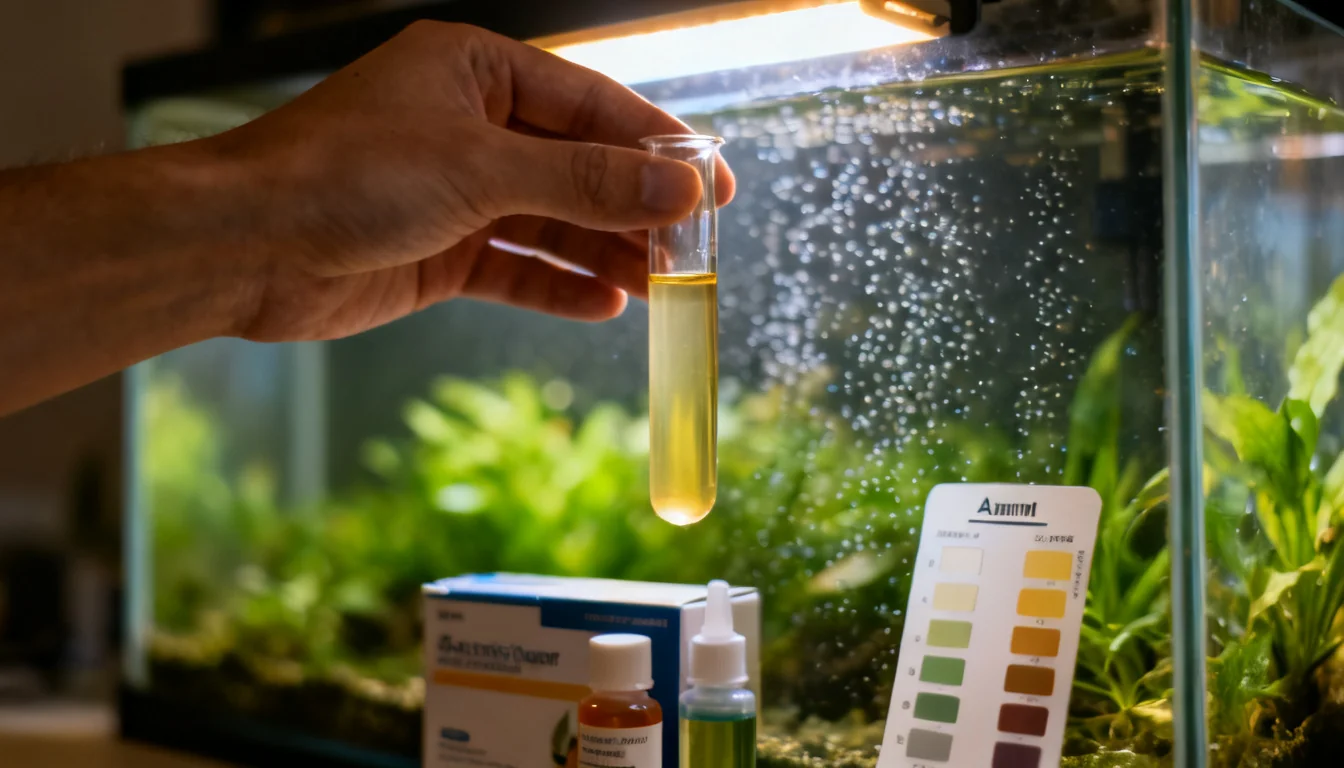
- Fishless cycling. Add a small ammonia source (pure ammonia or a pinch of fish food), test daily, and watch ammonia appear, then nitrite, then nitrate. When ammonia and nitrite both read zero and nitrate shows up on the test, the cycle is done. This takes 4 to 8 weeks and is the humane, recommended route.
- Seeded media. Borrow a handful of filter media from an established aquarium and the cycle can finish in a week or two. Most local fish stores will sell or share seeded media.
- Fish-in cycling. The old-school method — add a few hardy fish and let the bacteria build around them. It works, but it stresses the fish and demands daily testing and frequent water changes. Beginners should avoid it.
Cycling a new aquarium is a test of patience, not skill. The water will turn cloudy and the tank may smell a little; that's the bacteria colony growing. Let it finish.
Aquarium Water Quality: Testing, Changes, and Maintenance
Once the cycle is done, the job becomes keeping water quality stable. The numbers that matter in a cycled tank:
- Ammonia: 0
- Nitrite: 0
- Nitrate: under 20 to 40 ppm (lower is better)
- pH: 6.5 to 7.5 suits most community fish
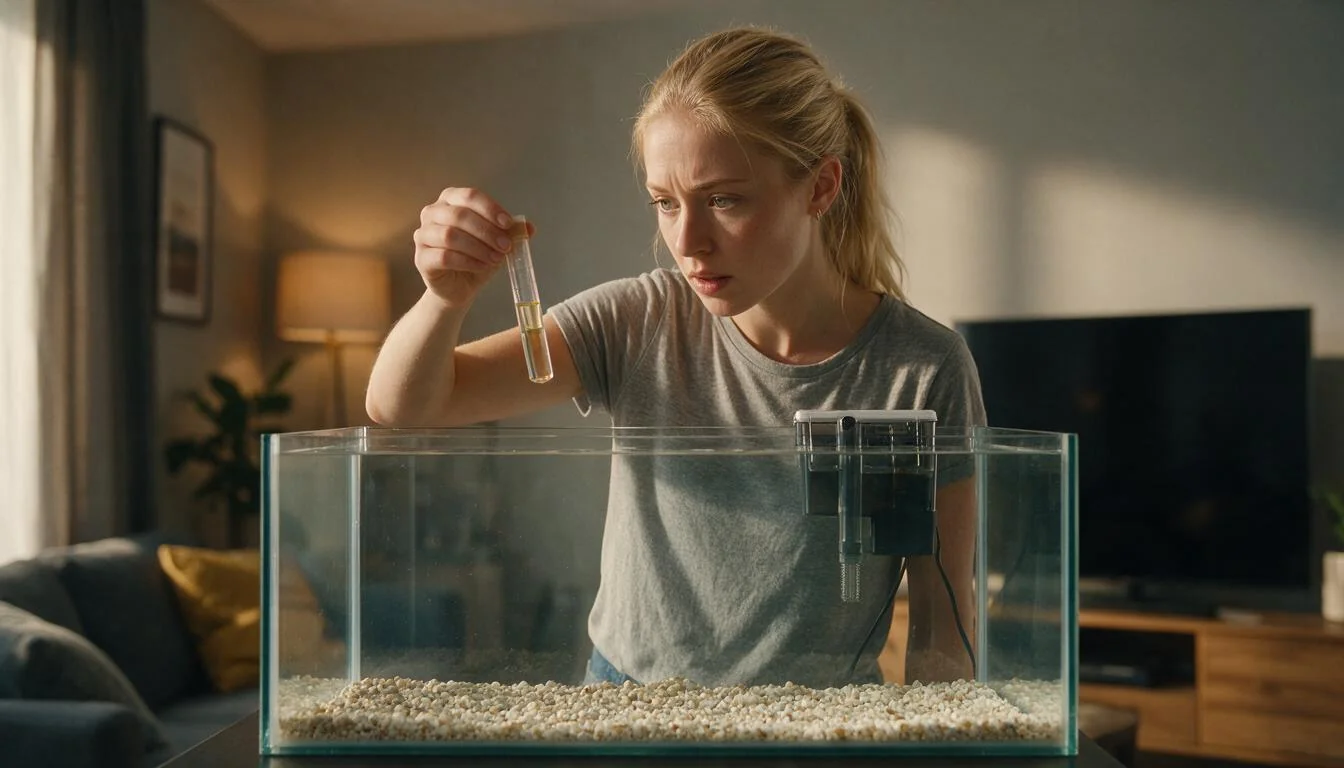
Liquid drop test kits are more accurate than test strips and worth the extra money. Test weekly at first, then every couple of weeks once the tank is stable.
The maintenance rhythm is simple:
- Change 20 to 25 percent of the water weekly. A gravel vacuum siphons water out while pulling debris from the substrate — the single most valuable tool in fish keeping.
- Refill with conditioned water at tank temperature. A big temperature swing is its own stress event.
- Rinse filter media in old tank water, never tap water. Tap water chlorine kills the bacteria colony you spent weeks growing.
- Don't overfeed. Feed only what the fish eat in about two minutes, once or twice a day. Most freshwater aquarium beginners overfeed — it's the number one killer of new tanks, because uneaten food rots straight into ammonia.
Good aquarium water quality is the product of one habit: weekly changes.
Think of the tank as a miniature fish habitat. Wild fish need oxygen, stable temperature, and cover — and so do yours.
Understanding how wild fish use their habitat, as covered in our fish habitat guide, makes you a better tank keeper. The habit works the other way too: fish that hold the same water column and cover in your tank behave the same way in a lake.
Stocking Your First Tank: Easy Fish for Beginners
When the cycle is complete, resist the urge to buy everything at once. Stock slowly — a few fish a week — and quarantine new arrivals in a separate tank for two weeks if you can. One sick fish can wipe out a whole new tank.
Good first fish are hardy, peaceful, and stay small:
- Guppies and platies. Livebearers, colorful, tough, and they breed. Ideal first fish.
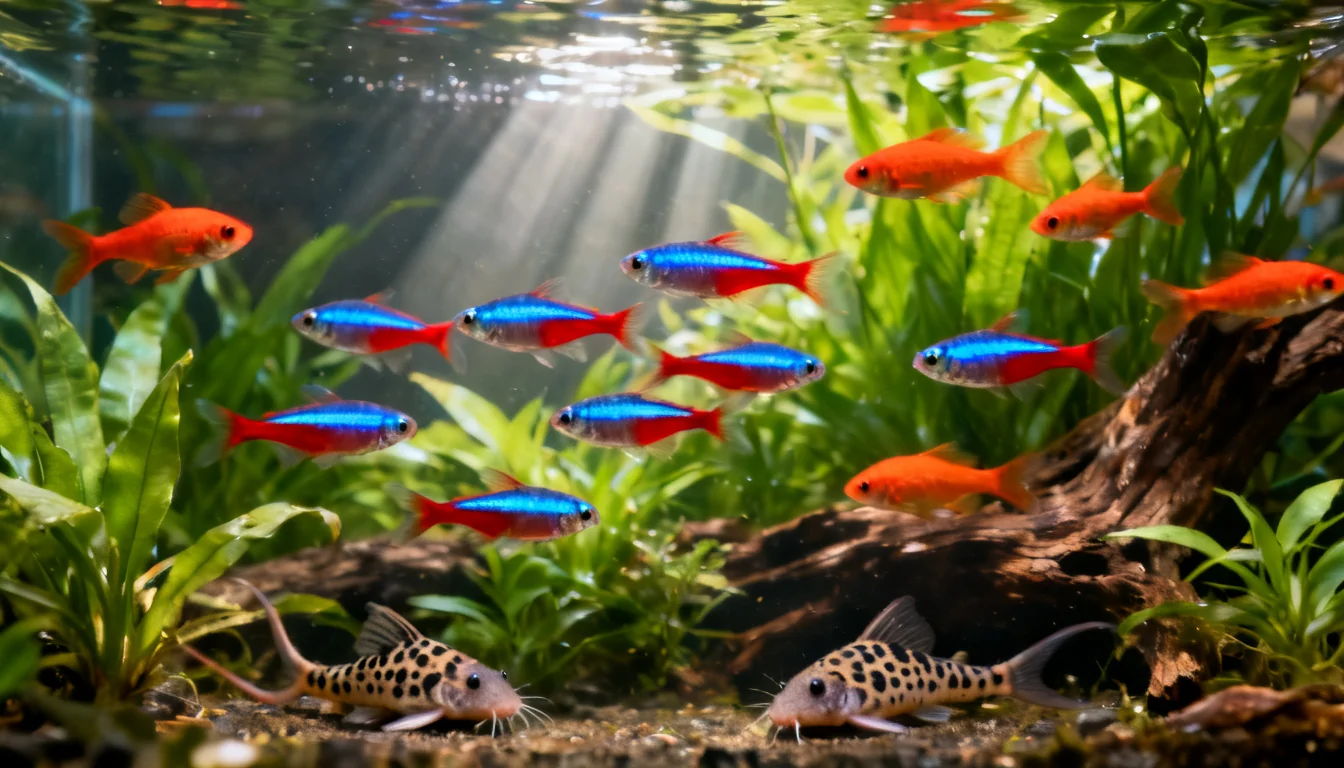
- Neon tetras. The classic schooling fish — keep them in groups of six or more in a 10-gallon-plus tank. They're a touch more sensitive than guppies and platies, so wait a few weeks after the tank stabilizes before adding them.
- Corydoras catfish. Small bottom-dwellers that clean up leftover food. Keep them in groups of six or more.
- A betta. Beautiful and hardy, but territorial — a betta does best in a 5-gallon tank on its own, or with peaceful tankmates in a bigger tank.
Two fish to avoid as a beginner: goldfish and plecos. Goldfish are anything but easy — they produce huge amounts of waste, need cold water, and a common goldfish can reach 12 inches and needs a very large tank as an adult.
Plecos are sold as "algae eaters," but the common pleco grows past 18 inches and produces more waste than it eats. Both are fish beginners buy on day one and regret by month six.
The old "one inch of fish per gallon" rule is a rough starting point for small community fish, not a law. It wildly overestimates for big fish and underestimates for tiny schooling fish. For a 20-gallon tank, a realistic first stocking is 10 to 15 small community fish, added a few at a time.
FAQ
How long does it take to cycle a new aquarium?
A fishless cycle takes 4 to 8 weeks, or 1 to 2 weeks with seeded filter media from an established tank.
If ammonia stays high for weeks and nitrite never appears, the cycle has stalled — usually because the water got too cold, the filter was cleaned in tap water, or the ammonia source ran out. Keep the tank at 78°F to 80°F and keep the ammonia source topped up until the bacteria finish the job.
What size aquarium should a beginner start with?
A 20-gallon long tank is the sweet spot: stable water chemistry, easy to light and heat, and it fits standard stands. Tanks under 10 gallons are workable for a single betta, but they swing temperature and chemistry too fast for a first community tank.
If you're sure you'll stay with the hobby, jump straight to 40 gallons — it costs little more to set up and is noticeably easier to keep stable. Just confirm the floor can take the weight before you fill it.
How often should you change the water in a freshwater aquarium?
Change 20 to 25 percent weekly with a gravel vacuum — that's the habit that keeps nitrate low and algae in check. If nitrate creeps above 40 ppm, the tank is overstocked or under-changed; bump the change to 30 percent until it drops.
And if algae suddenly blooms, the usual cause is feeding too much or changing too little, not a "dirty" tank.
Is a freshwater aquarium easier than a saltwater aquarium?
Yes. Freshwater tanks are cheaper to set up, more forgiving of mistakes, and have far more beginner-friendly fish. The same split that anglers know from freshwater vs saltwater fishing applies in miniature: start fresh, and treat saltwater as a later project.
Do freshwater fish need a heater?
Most community fish are tropical and need 74°F to 80°F, so yes — a heater and a thermometer are required equipment for a typical community tank.
If your home stays warm year-round the heater may barely run, but keep it installed anyway: one cold snap can drop the tank into the danger zone overnight. Cold-water species like goldfish and white cloud minnows need no heater at all.
How many fish can I put in a 20-gallon tank?
Start with 10 to 15 small community fish, added a few per week. The inch-per-gallon rule is a rough guide only; what matters is each fish's adult size, waste output, and need for a school.
Watch the water after each addition — if ammonia or nitrite appears, you've stocked too fast, so pause until the filter bacteria catch up. Waiting at least a week between additions gives the bacteria time to grow with the bioload.
The Bottom Line
Every experienced fish keeper was a freshwater aquarium beginner once, and the ones who stuck with it followed the same path: start with a 20-gallon tank, cycle it properly, test the water, change it weekly, and stock slowly.
Skip the cycle and you'll fight the tank for months. Do it right and the tank mostly runs itself — a stable little piece of the natural world you built, and one that will teach you more about fish than any book.