Where Do Fish Live? The Complete Fish Habitat Guide
Every angler has stared at a lake or river and asked the same question: where do fish live? The answer is more predictable than it looks. Fish don't scatter randomly — they hold where four habitat conditions line up: the right water temperature, enough dissolved oxygen, a comfortable current (or the right break from it), and vegetation or cover.
Understand those four factors and you can read any body of water and find the fish in it. That's the entire skill behind picking a spot, and it's why our how to fish a lake guide starts with habitat, not lures.
The Four Core Habitat Requirements
A good fish habitat is a place where a fish can survive and feed without spending all its energy. Scientists summarize it as food, oxygen, temperature tolerance, and cover — but for an angler, four practical factors matter most:
- Water temperature decides which species can live there at all and how active they are
- Dissolved oxygen is the invisible limit — no oxygen, no fish, no matter how pretty the water looks
- Current delivers food and oxygen, but fish only hold where they can break out of it
- Vegetation and cover give fish a place to hide, ambush, and find insects
These four fish habitat requirements work as a package, not separately. A weed bed at the perfect temperature is empty if the oxygen crashed overnight; a fast riffle full of oxygen holds no fish if the water is too warm for the species. When you find a spot where all four overlap — that's where you cast.
Water Temperature: The First Habitat Filter
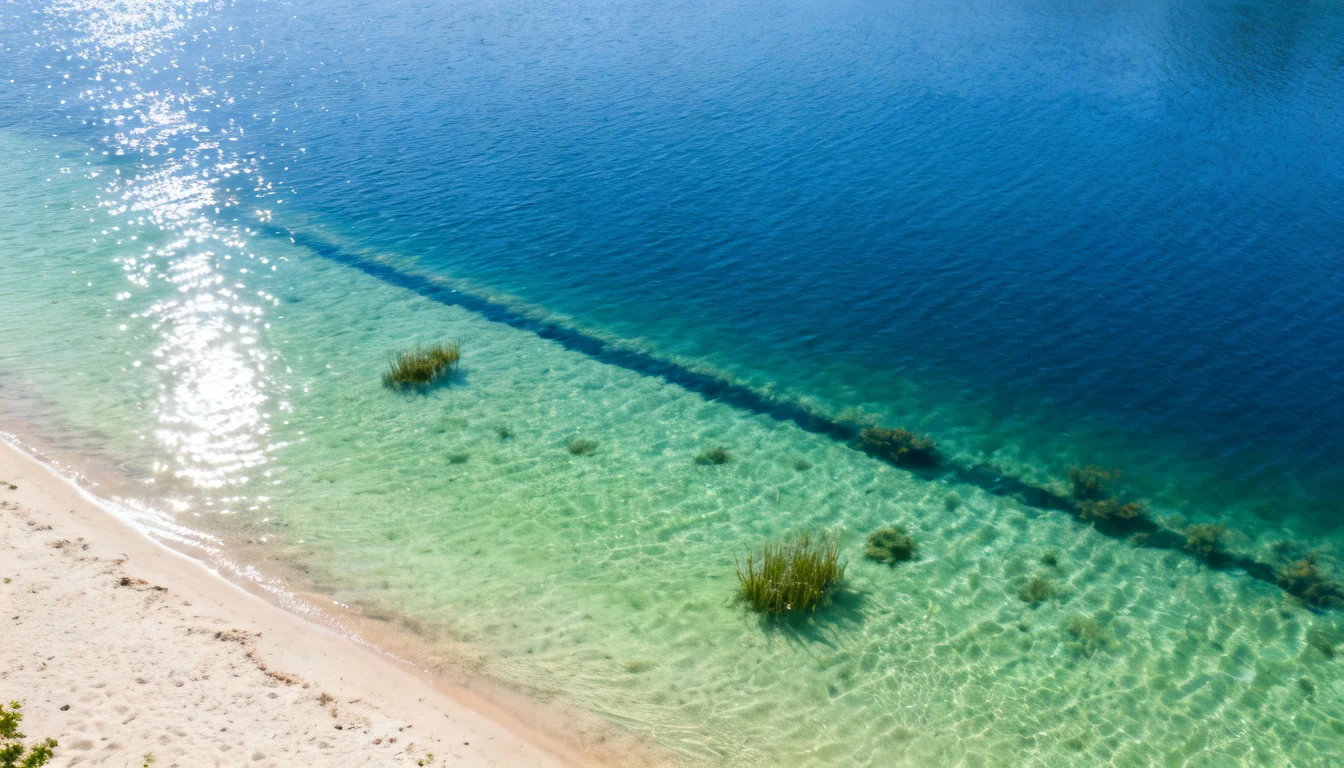
Water temperature for fishing is the single biggest factor in where fish live, because fish are cold-blooded — their body temperature matches the water, and so does their metabolism. A 10°C (18°F) change roughly doubles or halves how much they eat, how fast they grow, and how willing they are to chase a lure.
US freshwater fish fall into three temperature bands:
| Band | Species | Comfort range | Notes |
|---|---|---|---|
| Cold-water | Rainbow trout, brown trout, brook trout | 50–65°F | Need high oxygen; summer heat pushes them to springs, deep holes, or cooler streams |
| Cool-water | Walleye, northern pike, yellow perch | 60–70°F | Active in cooler months; go deep or nocturnal in summer (pike tolerate a wider band, roughly 50–72°F) |
| Warm-water | Largemouth bass, bluegill, channel catfish | 70–85°F | Thrive in warm lakes and ponds; bass feed most around 65–78°F |
In summer, lakes stratify into layers: warm surface water, a rapid temperature drop called the thermocline, and cold dense water below. In productive lakes the deep layer can run low on oxygen by late summer, so fish stack right at the thermocline — one of the most reliable summer spots on any lake.
In spring, the shallows warm first, which is why fish move in early; in fall, the turnover mixes the whole lake and fish scatter at every depth. The old angler's saying — fish the flats in spring, the deep water in summer — describes this exact cycle, and it holds on US lakes too.
Dissolved Oxygen: The Invisible Requirement
Fish breathe through gills, pulling oxygen that is dissolved in the water — not from bubbles, but from the water itself. Healthy fishing water typically holds 5–9 mg/L of dissolved oxygen; many fish get stressed below 3 mg/L and die below 2 mg/L.
Trout and other cold-water species sit at the top of that range and need at least 6 mg/L to thrive. Two rules of thumb:
- Cold water holds more oxygen than warm water — one reason trout streams stay productive while a hot pond struggles
- Moving water holds more oxygen than still water — riffles, inlets, and wind-blown banks are natural oxygen pumps
Dissolved oxygen for fish comes from three sources: the surface (wind and waves mix air in), aquatic plants (photosynthesis), and inflowing water (springs, creeks, and rain runoff).
It disappears fastest at night, when plants stop producing and start consuming, and after an algae bloom crashes, when the dying algae guzzles oxygen as it decays. That's the mechanism behind summer fish kills: a week of calm hot weather turns a green pond into an oxygen desert.
The practical takeaway: when fish are sluggish and nothing bites, look for oxygen — the inlet, the riffle tail, the wind-blown bank, the weed line in the afternoon, when plants are actively producing.
Wind is a lake's best oxygen pump: a steady breeze mixes the surface and pushes food downwind, and the bite usually follows it. The worst conditions are a long stretch of hot, calm weather, when the surface stays flat and a green, algae-choked pond loses oxygen overnight.
Current: Where Food and Fish Meet
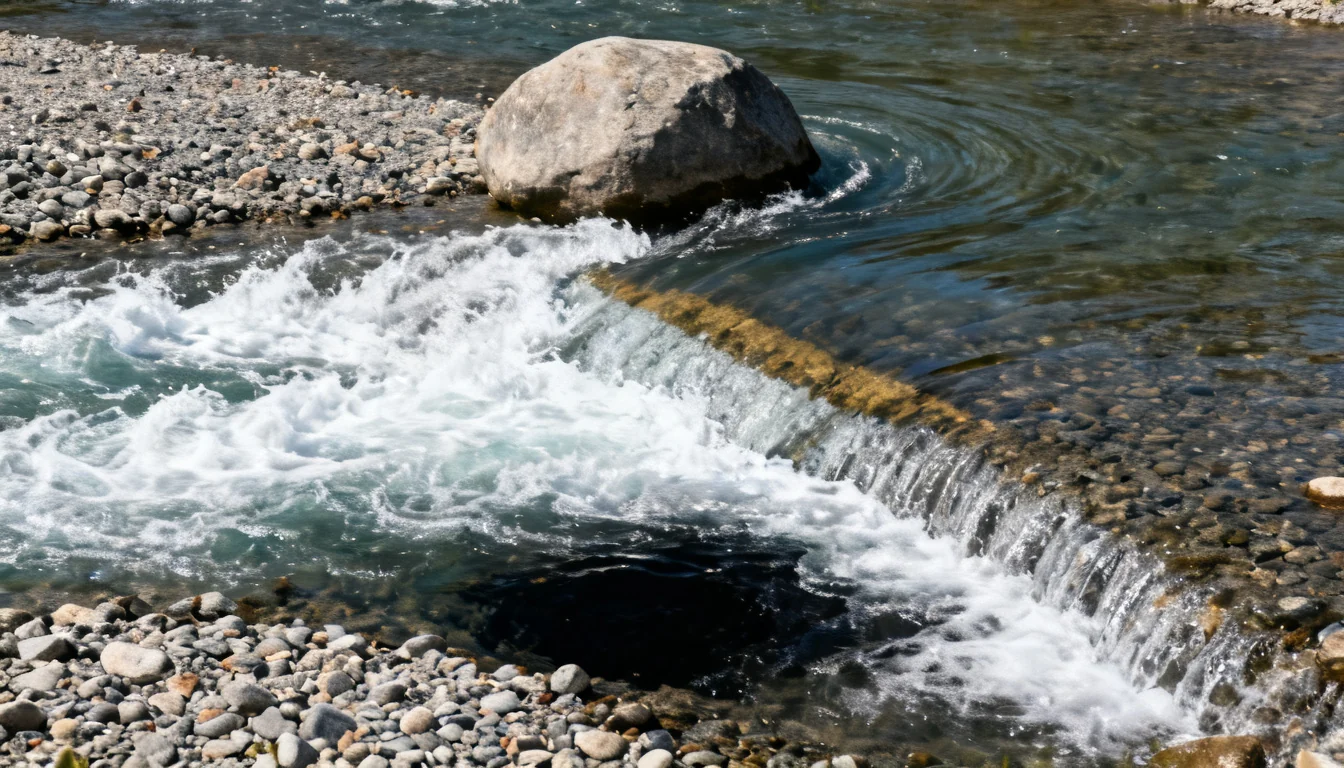
In rivers and streams, current is the delivery system: it carries insects, baitfish, and organic matter past waiting fish. That's why river fish point upstream and hold in current breaks — the seam where fast water meets slow, the eddy behind a boulder, the deep hole below a riffle, the undercut bank.
They get the food without paying the energy cost of swimming in the flow. Our how to fish a river guide breaks down each of these holding spots.
Lakes have current too — wind-driven. A steady breeze pushes plankton and baitfish toward the downwind bank, and the predators follow. Inlets create the same effect: a creek entering a lake brings oxygen, food, and a strip of moving water that fish line up along.
Whenever the surface is rippled and the water is moving, check where it's going and fish the front edge of it.
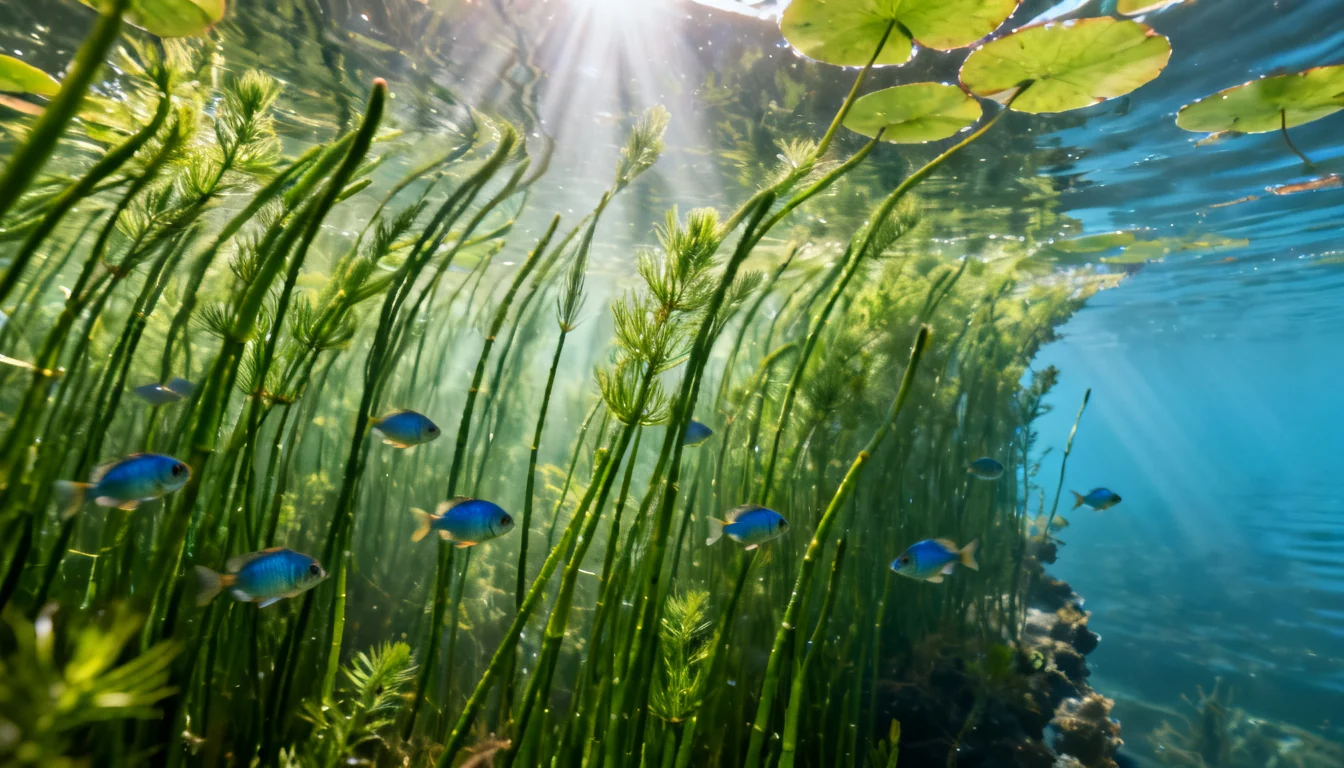
Vegetation: Cover, Food, and Oxygen Generator
Aquatic plants are the richest single habitat feature in most waters. A healthy weed bed does three jobs at once: it pumps oxygen into the water by day, it shelters insects, crayfish, and baitfish, and it gives predators a place to ambush.
That's why the weed line — the edge where plants meet open water — is the first place most anglers look.
Different plants create different habitats:
| Plant type | Examples | What it gives fish |
|---|---|---|
| Submerged | Coontail, milfoil, hydrilla | Dense cover and insect life; bass and panfish work the edges |
| Emergent | Cattails, reeds, bulrushes | Shade, structure, and bankside ambush points |
| Floating | Lily pads, duckweed | Overhead shade, insect hatches, and a classic topwater canopy |
One warning: vegetation is only an oxygen source during the day. A thick mat of dead or dying plants consumes oxygen at night, so the same weed bed that holds bass at midday can be dead water at dawn.
When a lake is choked with algae or weeds, fish push to the open-water edge or the surface — not the middle of the jungle. Largemouth bass are the classic vegetation fish, and our largemouth bass species guide explains exactly how they work the deep outside edge of weed lines, pads, and timber.
Fish Habitat by Species: A Quick Reference
| Species | Home habitat | What to look for |
|---|---|---|
| Largemouth bass | Warm lakes and ponds | Weed lines, lily pads, laydowns, docks, points in 3–15 ft |
| Rainbow trout | Cold streams and deep lakes | Riffles, seams, undercut banks, springs, 50–65°F water |
| Channel catfish | Warm rivers, lakes, ponds | Deep holes, current edges, mud flats, structure near dark water |
| Bluegill | Warm weedy shallows | Weed beds, docks, lily pads in 2–10 ft |
| Walleye | Cool lakes and big rivers | Rocky points, humps, current edges, low-light hours |
| Northern pike | Weedy lakes and rivers | Vegetated bays, weed edges, ambush cover |
How to Use Habitat to Find Fish
You don't need a fish finder to apply any of this. Run the four-factor checklist on any spot before you cast:
1. Temperature — is this water in the species' comfort band for the season? Spring shallows, summer thermocline, fall anywhere, winter deep holes.
2. Oxygen — is there moving water, wind, plants, or an inlet nearby? If the water is hot, still, and green with algae, fish will be scarce.
3. Current — in rivers, fish the breaks, not the fast water; on lakes, fish the wind-blown side.
4. Vegetation and cover — weed edges, timber, docks, and rocks beat open water almost every time.
Read the water color as a habitat clue. Pale green means plankton-rich, productive water — the base of the food chain. Clear water with a visible bottom at 3+ ft means thin habitat: fewer fish, and spooky ones. Muddy brown after rain means fish move shallow to feed.
Dark, foul, or scummy water usually means pollution or an algae crash — skip it. Give a promising spot 20–30 minutes, then either adjust depth or move; habitat tells you where to start, and moving confirms it.
FAQ
Do fish need oxygen in the water?
Yes — fish extract dissolved oxygen through their gills, and most need roughly 5 mg/L or more to thrive. Cold, moving, or wind-mixed water carries the most oxygen; hot, still, algae-choked water carries the least, which is why summer fish kills happen in calm ponds.
Why do fish hold near vegetation?
Vegetation provides three things at once: oxygen during daylight, insect and baitfish food, and cover for ambush or escape. The outside edge of a weed bed — where plants meet open water — is the highest-value spot, because fish get cover and an open escape route at the same time.
What fish live in cold water?
Trout (rainbow, brown, brook) and salmon are the classic cold-water fish, comfortable in the 50–65°F range. Cool-water species like walleye, pike, and perch sit just above them at 60–70°F, and they all need well-oxygenated water.
How does water temperature affect fish behavior?
Because fish are cold-blooded, temperature controls their metabolism and appetite. Each species has a comfort band where it feeds aggressively; outside that band it slows down, holds in deeper or cooler water, and strikes reluctantly. Find the species' band and you find the bite.
Where do fish live in a lake?
Most lake fish relate to structure and edges: weed lines, points, drop-offs, docks, and timber in 3–15 ft of water, plus the thermocline band in summer and deep basins in winter. Open, featureless water holds far fewer fish than the edges around it.
The Bottom Line
Fish habitat comes down to four factors — temperature, dissolved oxygen, current, and vegetation — and fish are found where all four overlap. Learn to check them on any lake, river, or pond and you'll stop guessing where to cast. For the next step, see how these same habitat rules play out in freshwater vs saltwater fishing.