How to Catch Crappie: The Complete Fishing Guide
Crappie might be the most cooperative fish in freshwater: they school up tight, hit small baits readily, and taste great fried. Learning how to catch crappie is simpler than almost any other species — fish the spring spawn in shallow water, slow down, and downsize everything.
These crappie fishing tips cover when to go, what gear to use, the best baits, and the two techniques that account for most crappie caught every year: jigging and fishing live minnows under a bobber. New to fishing? Our fishing for beginners guide gets you on the water fast.
When to Fish for Crappie: Spring Spawn Is Prime Time
The spring crappie spawn is the best fishing of the year, hands down. When water temperatures hit the mid-50s to low 60s, crappie abandon deep water and move into 1-6 feet near shore cover to nest — and for a few weeks they'll hit almost anything placed in front of them.
| Season | Water Temp | What Crappie Are Doing | Best Strategy |
|---|---|---|---|
| Spring | Mid-50s to low 60s °F | Spawning in 1-6 ft near shore cover | Fish shallow: docks, stumps, brush, laydowns — jigs and minnows both produce |
| Summer | 70°F+ | Deep (15-30 ft), suspended over structure | Vertical jig over brush piles; fish dawn, dusk, and night |
| Fall | 55-70°F | Mid-depth, following shad | Work bait schools along creek channels and points |
| Winter | 40-50°F open water (33-39°F under ice) | Deep, tight to cover, very slow | Slow jigs and minnows near the bottom of deep brush |
Best times of day: dawn and dusk are the classic windows. Crappie have light-sensitive eyes, so cloudy days extend the bite and bright midday sun shuts it down. In summer and in clear lakes, night fishing with a lantern or glow jigs is a proven producer.
Weather edge: a warming trend in early spring pulls crappie shallow fast, and a few warm, stable days after a cold front trigger the first big shore push of the year.
Crappie Fishing Gear: Light Is Right
Everything about crappie fishing gear follows one rule: light. Crappie have soft mouths and feed on small prey, and heavy tackle kills both the bite and the hookup.
- Rod: 6-7 ft ultralight or light spinning rod — sensitive enough to feel a 1/32 oz jig fall
- Reel: 1000-2500 size spinning reel, spooled with 4-8 lb monofilament or fluorocarbon (6 lb is the all-around choice)
- Hooks: small #2-#6 hooks for minnows; pair them with jigheads in 1/32-1/16 oz (shallow) and 1/8 oz (deep summer water)
- Bobbers: slip bobbers for adjustable depth; small fixed bobbers for bank fishing
- Extras: split shot, a minnow bucket, needle-nose pliers for deep-hooked fish
You don't need a boat or a full tackle box. A single ultralight combo, a handful of jigs, and a bucket of minnows covers most crappie fishing situations.
Best Crappie Bait: Minnows & Tiny Jigs
Live bait — minnows are king. Small shiners and fathead minnows are the #1 crappie bait nationwide, and for good reason: a lively minnow matches the crappie's natural prey exactly. Hook the minnow through the lips for casting, or through the back just behind the dorsal fin when still-fishing, so it swims naturally. Keep them lively — a dead minnow is a stick.
Lures — small soft plastics. Tube jigs, curly-tail grubs, and minnow-imitation soft plastics in 1.5-2.5 inches catch crappie when live bait is hard to find. The proven colors are chartreuse, white, black/chartreuse, and pink — with chartreuse and white the defaults for stained water.
Match the hatch. In reservoirs, shad-colored baits (silver, white, pearl) mirror the dominant forage; in clear natural lakes, translucent and natural tones work better. If the fish are feeding on 2-inch shad, don't throw a 4-inch swimbait at them.
Crappie Jigging: The #1 Tactic
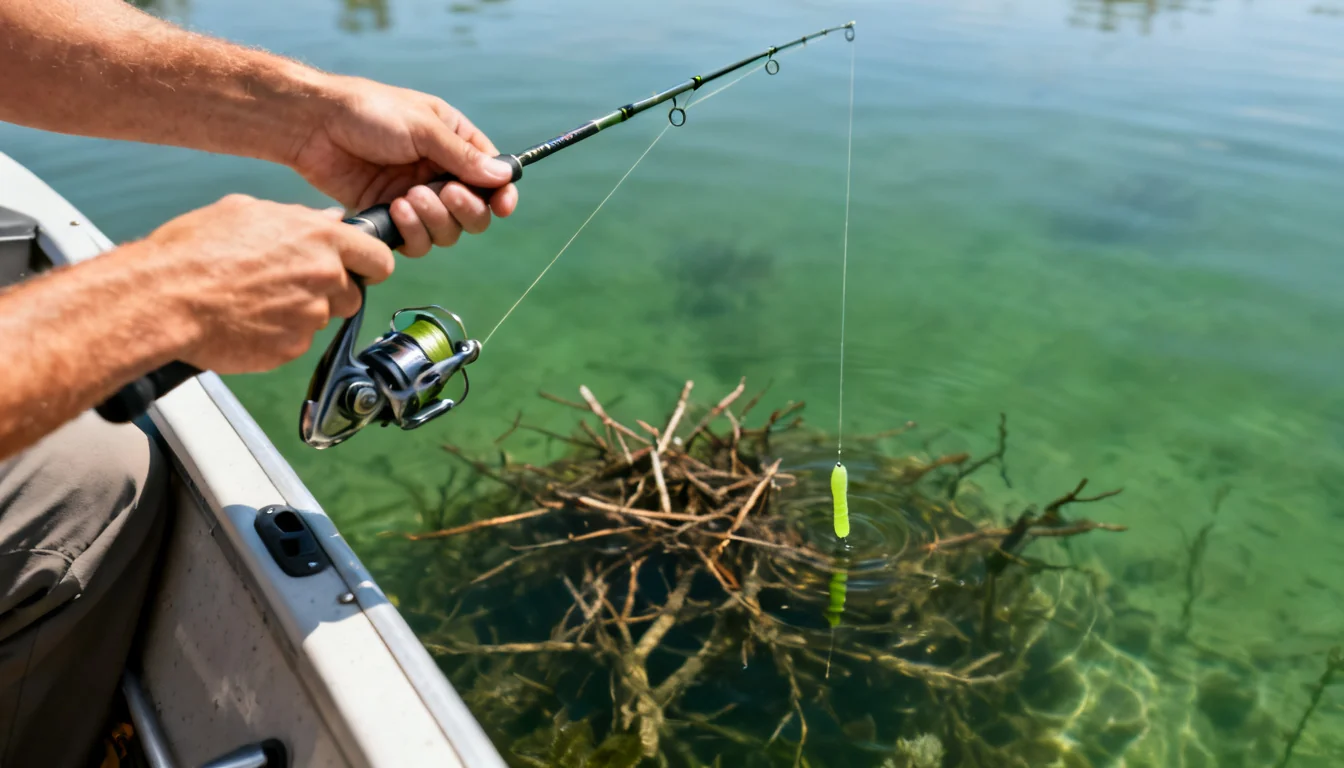
Crappie jigging is the most effective technique in the book, and it works year-round — the presentation just changes depth. The key principle: crappie strike on the fall, so every part of the retrieve is built around a slow, controlled drop.
1. Cast to structure — a dock post, stump, brush edge, or weed line — or drop straight down when you mark fish on a finder.
2. Let the jig sink on slack line. Watch the line for a tick; crappie often hit before you start working the bait.
3. Lift the rod tip 6-12 inches slowly, then let the jig fall back on slack.
4. Pause 2-5 seconds between lifts. This pause is where most strikes happen.
5. Repeat down the structure, then move — crappie hold tight to cover, and the next brush pile may hold the whole school.
Weight by depth: 1/32-1/16 oz jigheads for 1-10 feet (spring and fall), 1/8 oz for 15-30 feet (summer). In strong wind or current, step up a size so the jig still falls straight. Slow always beats fast — if you're not getting bites, slow down again before you change baits. For species ID and behavior background, see our crappie species guide.
Crappie Fishing Rigs: Bobber, Jig & Spider
Two crappie fishing rigs cover nearly every situation from the bank to the boat — plus a third open-water pattern for big reservoirs.
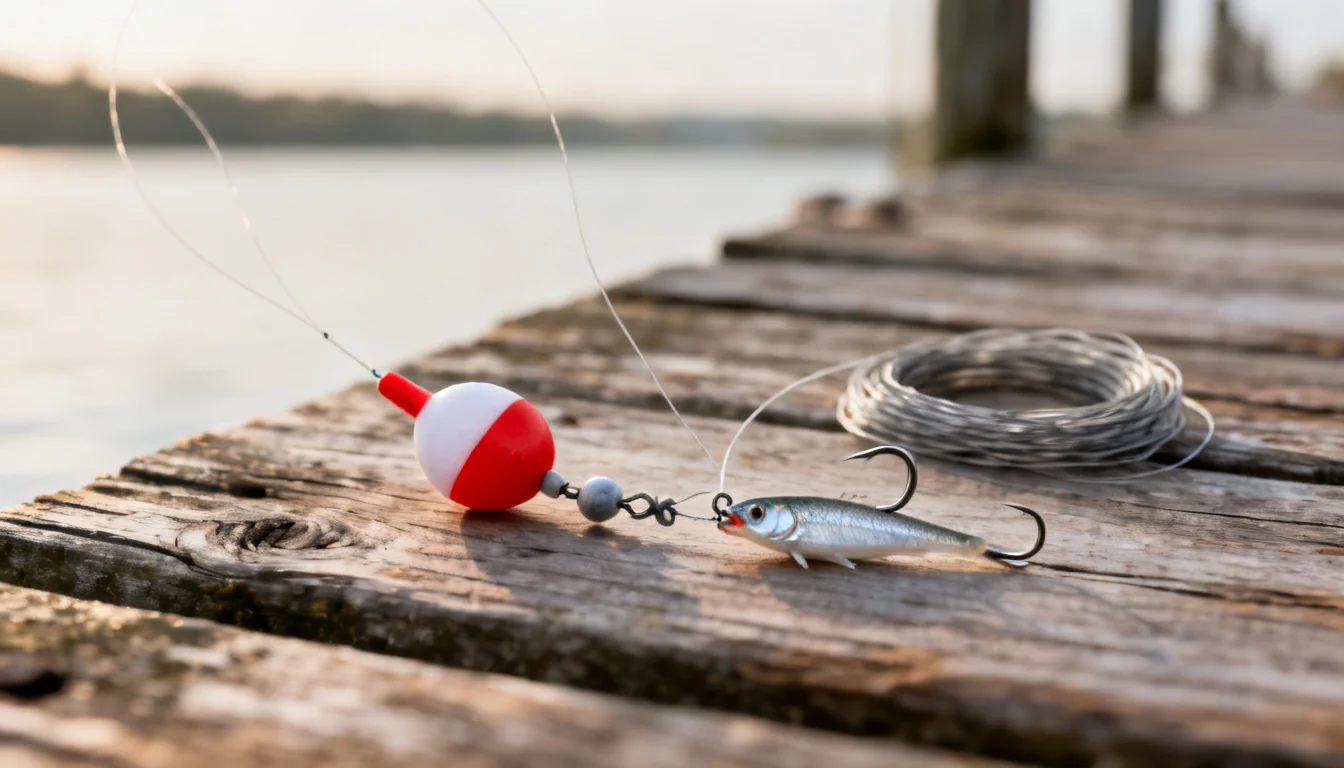
Slip-bobber minnow rig (the classic). Thread a slip bobber onto the line with a small bobber stop, tie on a #4-#6 hook, and add a split shot 6-12 inches above the hook. Set the stop so the minnow hangs just above the cover — that depth control is what separates a good rig from a tangled mess. It's the classic slip-bobber rig in every serious crappie angler's tackle box, and it's deadly for docks, brush piles, and shore fishing.
Jighead rig. A ball-head or round jighead with a soft plastic body, cast or fished vertically. The simplest rig in fishing and the backbone of crappie jigging.
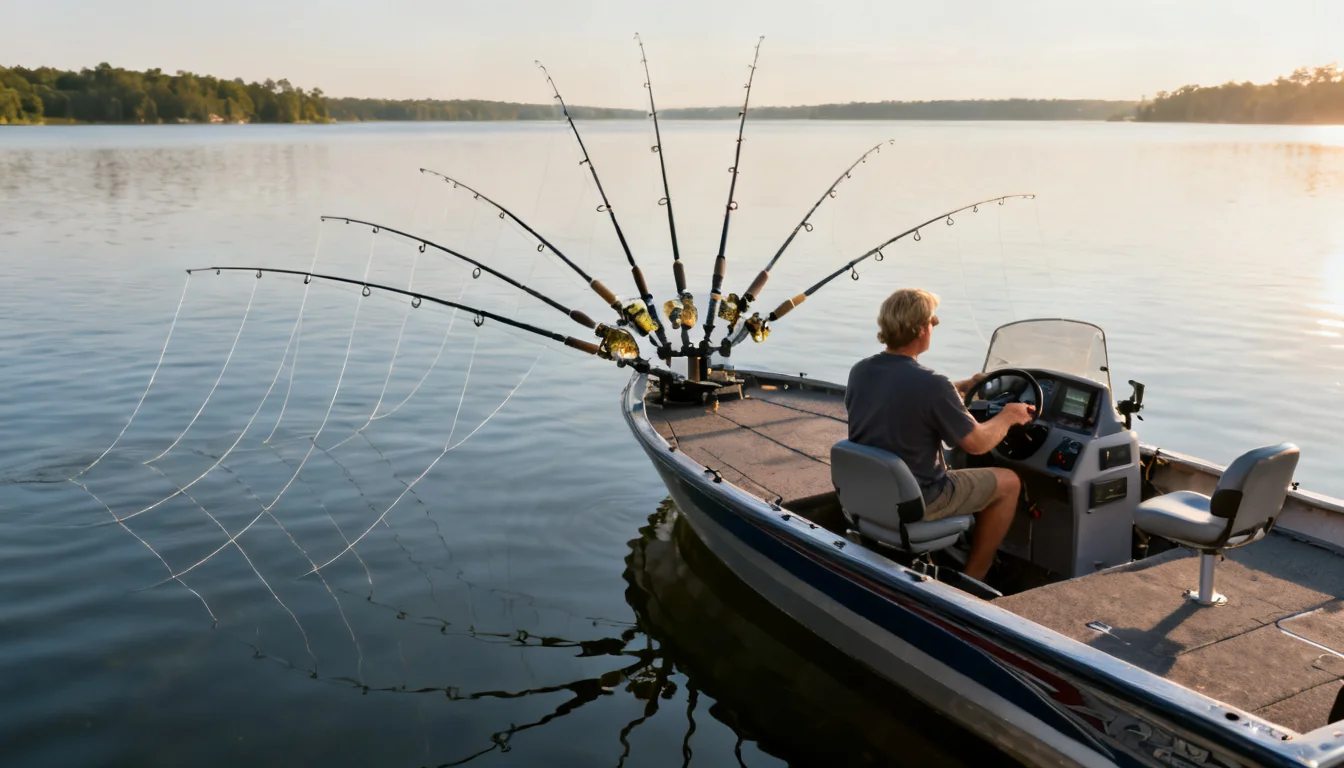
Spider rigging (open-water pattern). When crappie suspend in open water away from shore cover, boats troll 4-8 rods on long poles off the bow, each rod fishing a jig or minnow at a different depth. It covers water fast and finds suspended schools that bank anglers never reach — the go-to summer pattern on big reservoirs.
Where to Find Crappie
Crappie location changes with the season, but one rule never changes: find the structure, find the fish.
- Spring: shore cover in 1-6 ft — stumps, laydowns, dock posts, brush piles, and weed edges. Walk the bank and cast to every piece of wood you can see.
- Summer: creek channels, standing timber, and deep brush piles at 15-30 ft. A fish finder earns its keep here — look for schools of arches suspended just above the cover.
- Fall: mid-depth water following shad schools; work points and channel bends where bait funnels through.
- Winter: crappie compress into tight groups on deep structure; mark a pile and fish it slowly and thoroughly.
Reading structure like a map is a skill of its own — our guide to how to fish a lake walks through the cover types and depths that hold fish in any water body.
Common Crappie Fishing Mistakes (And Fixes)
1. Gear too heavy. A bass rod and 20 lb line will snub every light bite. Downsize to ultralight and 4-8 lb line.
2. Fishing too fast. Crappie don't chase. If a jig is moving faster than a slow fall, you're fishing it wrong.
3. Fishing the wrong depth. Crappie suspended at 20 feet won't rise for a jig working at 5. Match your depth to the fish, not the other way around.
4. Ignoring low light. Fishing only midday means missing the two best windows of the day. Plan trips around dawn, dusk, or cloudy weather.
5. Bait too big. A 4-inch bait for 10-inch fish is a waste of time. Keep soft plastics at 1.5-2.5 inches and minnows small.
6. Setting the hook like a bass angler. Crappie are papermouths — a hard hookset rips right through the mouth tissue. Use a firm, steady sweep instead.
How to Catch Crappie FAQ
Do crappie bite in the rain?
Yes — light rain often improves the bite. Cloud cover extends low-light feeding, and runoff washes food into the shallows. The exception is a hard, cold-front downpour that drops water temperature fast, which stalls the bite until conditions stabilize.
What size jig is best for crappie?
Use 1/32-1/16 oz jigheads in shallow water (1-10 ft) and 1/8 oz for deep summer fishing (15-30 ft). Soft plastic bodies of 1.5-2.5 inches match the baitfish crappie feed on.
Why are crappie called papermouths?
The thin, delicate membrane around a crappie's mouth tears easily on a hard hookset — hence "papermouth." It's why crappie anglers use light line and a firm but gentle sweep instead of a violent hookset.
Do you need a boat to catch crappie?
No. In spring, spawning crappie sit within casting distance of the bank, and docks, piers, and shore brush produce all season. Boats help in summer, when crappie move to deep structure, but bank and dock anglers catch plenty.
How many crappie can you keep?
Crappie limits are generous because the fish school so tightly — most states allow 10-30 fish per angler per day, often with a 9-10 inch minimum size. Always check your state's regulations before you keep fish.
Can you catch crappie in winter?
Yes, though the pace slows. Winter crappie hold tight to deep brush and timber, moving little; slow, small jigs or minnows fished right on the cover produce. Ice fishing for crappie is a whole tradition of its own in the North.
The Bottom Line
How to catch crappie in one line: fish the spring spawn shallow, slow down, and downsize everything. A light rod, tiny jigs or live minnows, and a slip bobber rig put fish in the boat from the bank or the boat — spring through winter. Find the structure, match the depth, and work the bait slowly; the schools will do the rest.