Largemouth Bass: Complete Species Guide
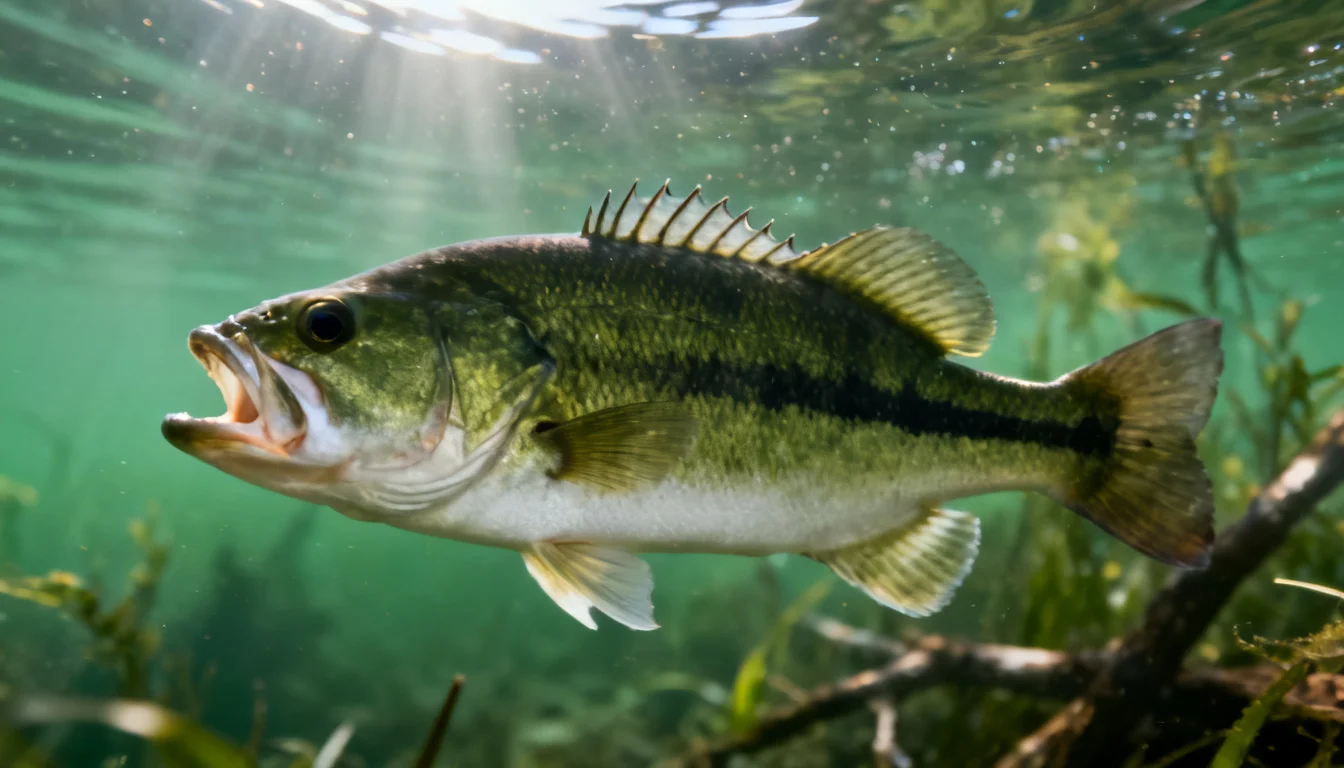
If there is one fish that defines American freshwater fishing, it's the largemouth bass (Micropterus salmoides). From farm ponds in Texas to glacial lakes in Minnesota, no other fish is pursued by more anglers, featured in more tournaments, or written about more often. This complete largemouth bass guide covers everything you need to know: how to identify one, where they live, what they eat, how big they get, and the most effective ways to catch them.
Why Largemouth Bass Are America's #1 Game Fish
The largemouth bass earned its crown for a few simple reasons:
- They're everywhere — stocked far beyond their native range, they now swim in every state except Alaska.
- They fight hard — powerful runs, head-shaking jumps, and last-second dives into cover make every hookup memorable.
- They're aggressive — unlike many game fish, bass readily strike lures, which makes them perfect for spin fishing, baitcasting, and fly fishing alike.
- They grow big — 8+ lb is a trophy in most states, a 10-pounder is a double-digit trophy anywhere, and the record fish exceed 20 pounds.
Whether you're a first-time angler or a tournament veteran, the largemouth bass is the fish to know. New to the sport? Start with our fishing for beginners guide.
How to Identify a Largemouth Bass
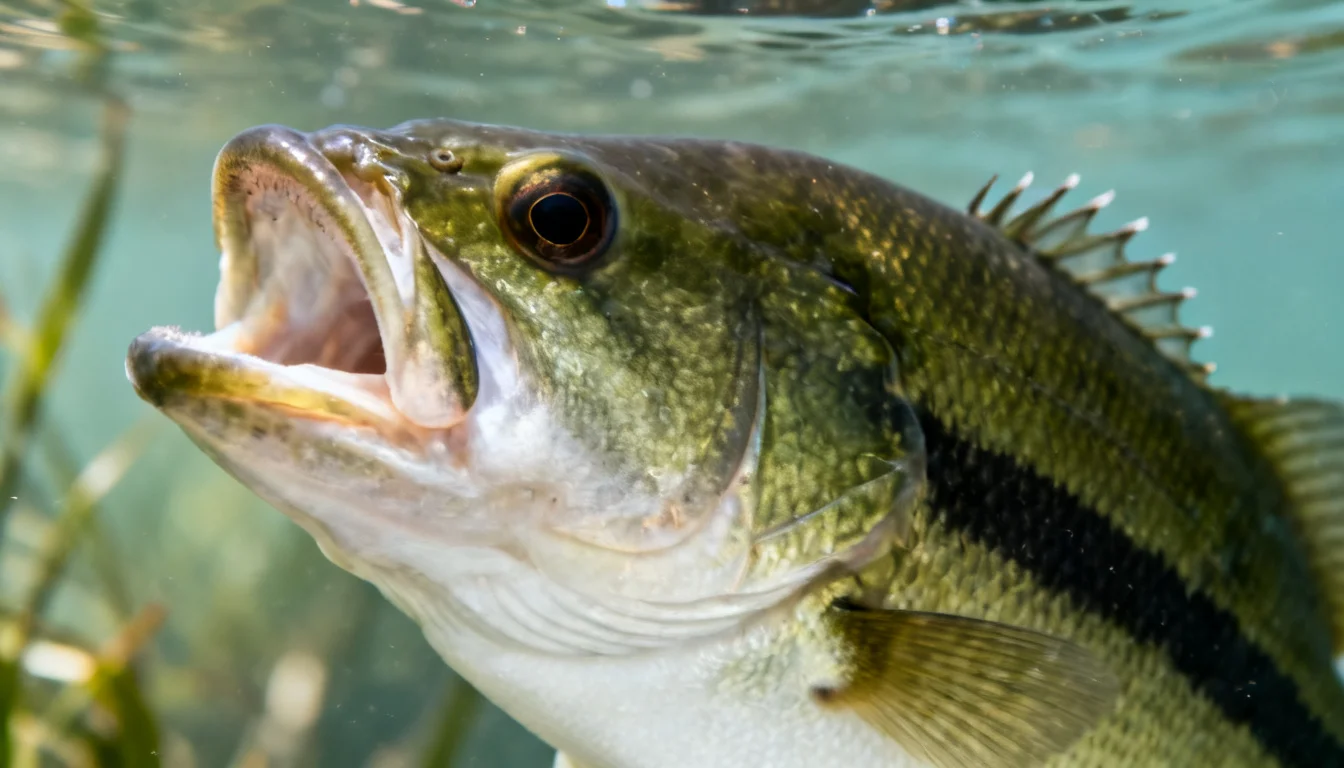
Largemouth bass are deep-bodied, greenish fish with a few unmistakable features:
| Feature | Largemouth Bass | Smallmouth Bass (for comparison) |
|---|---|---|
| Mouth size | Hinged jaw extends past the eye | Jaw ends at or before the eye |
| Body color | Green to olive, dark lateral band | Bronze to brown, vertical bars |
| Dorsal fin | Deep notch between spiny and soft rays | Shallow notch |
| Adult size | 12-20 in, 1-5 lb typical | 10-18 in, 1-3 lb typical |
The single most reliable ID trick: if the jaw hinge passes the back of the eye, it's a largemouth. The lateral line has a distinctive dark, horizontal band that breaks into blotches toward the tail.
Smaller bass are sometimes confused with spotted bass (Micropterus punctulatus), but spotted bass have a small tooth patch on their tongue and a more clearly broken lateral band.
Largemouth Bass Behavior & Habits
Understanding how a bass thinks explains almost everything about catching it.
Ambush predators. Largemouth bass rarely chase food across open water. They sit in or beside cover — weed beds, laydowns, docks, brush piles — and explode out to intercept prey passing by. This is why casting to structure beats casting to open water, every time.
Low-light feeders. Bass are most active at dawn and dusk, and on cloudy days. In bright midday sun they pull deeper or tuck under cover. Night fishing for bass with big dark lures is a proven summertime tactic.
Lazy in cold water. Bass are cold-blooded, and their metabolism tracks water temperature:
| Water Temp | Bass Behavior |
|---|---|
| < 45°F (7°C) | Slow, deep, barely feeding |
| 45-55°F (7-13°C) | Pre-spawn staging, starting to move shallow |
| 55-65°F (13-18°C) | Pre-spawn staging into spawning — males build nests in 1-6 ft once water passes ~60°F |
| 65-78°F (18-26°C) | Peak feeding, most aggressive |
| 78-85°F (26-29°C) | Morning/evening only, deep midday |
| > 85°F (29°C) | Stressed; fish deeper, oxygen-rich water |
Territorial aggression. During the spawn, males guard nests aggressively and will strike anything that comes near — which is why spring is the easiest season to catch bass, and why responsible anglers practice catch-and-release during the spawn.
Largemouth Bass Habitat: Where They Live in the US
Largemouth bass are native to the Mississippi River basin, the Southeast, and the eastern seaboard, from Florida up to the Great Lakes. Today they're found in all 48 contiguous states plus Hawaii, thanks to over a century of stocking.
Top bass states (by fishery reputation):
- Texas — Lake Fork, Sam Rayburn, and Falcon Lake regularly produce 10+ lb bass
- Florida — the state's year-round growing season produces the biggest average size; Kissimmee chain and Lake Okeechobee are legendary
- California — Castaic Lake, Lake Dixon, and Clear Lake hold the largest bass ever caught (state record: 21.7 lb)
- Georgia — Montgomery Lake produced the all-time world record (22 lb 4 oz, 1932)
- Minnesota/Wisconsin/Michigan — outstanding numbers of bass in the North, where bass grow slower but fisheries are packed
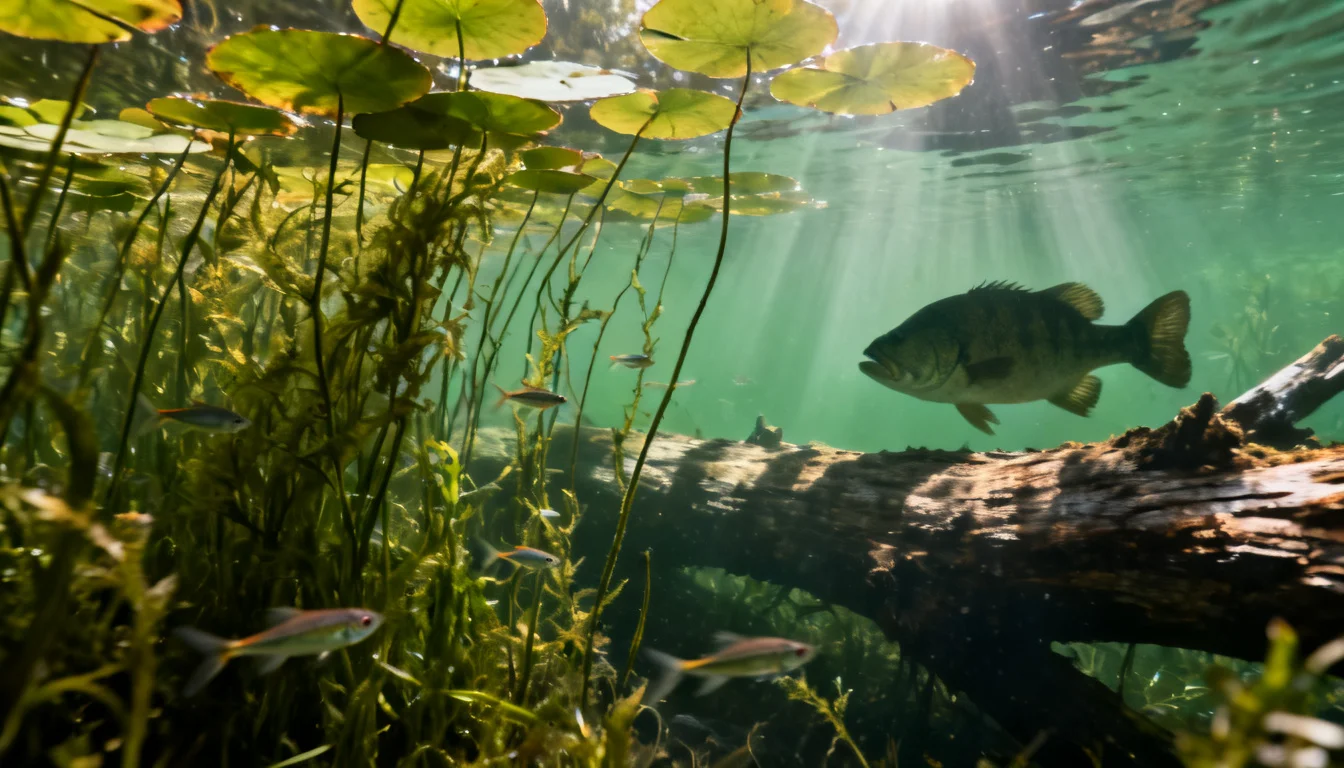
Where they live within a water body: largemouth bass are a warm-water, structure-loving species. In any lake, pond, or slow river — see our full guide on how to fish a lake — they hold near:
- Weed lines and lily pads
- Submerged timber and laydowns
- Docks, piers, and boat lifts
- Rock piles and riprap
- Points, humps, and drop-offs
- Brush piles and man-made fish attractors
The universal rule: cover equals bass. Find thick structure in 3-15 ft of water and you're in the strike zone.
What Do Largemouth Bass Eat?
Wondering what do bass eat? Bass are opportunistic predators that eat whatever is abundant and catchable. Their diet shifts with size and season:
Primary foods:
- Crayfish — a top food source in rivers, rocky lakes, and during spring/fall
- Shad and other baitfish — threadfin shad and gizzard shad are staples in reservoirs
- Bluegill and other panfish — big bass target them year-round
Seasonal extras:
- Frogs — summer evenings, especially around lily pads
- Insects and dragonflies — juveniles feed on these
- Small mammals and birds — trophy bass occasionally take mice, ducklings, and snakes
- Worms and leeches — more important in rivers and small ponds
How size changes the menu: a 1-pound bass eats insects and tiny shad; a 5-pound bass eats bluegill and crayfish; a 10-pound bass eats anything it can fit. Match your lure size to the forage in the lake — if the lake is full of 3-inch shad, a 4-inch soft plastic in shad colors will outperform a giant swimbait.
Best Ways to Catch Largemouth Bass
The complete tactics guide lives in our dedicated article — How to Catch Largemouth Bass — but here's the short version:
These bass fishing tips work in any lake — from farm ponds to big reservoirs. Start with the proven top 5 bass lures:
1. Texas-rigged soft plastic worm — the #1 bass lure of all time; weedless and deadly around cover
2. Jig + craw trailer — best for big bass around rocks and timber
3. Spinnerbait — perfect for covering water and windy banks
4. Crankbait — great for finding fish along points and drop-offs
5. Topwater (frog, popper, buzzbait) — explosive strikes at dawn and dusk
When to go:
- Spring: pre-spawn bass move shallow as water warms through the mid-50s, then spawn once it passes ~60°F — best chance at a trophy
- Summer: fish early morning and late evening; go deep or under heavy cover midday
- Fall: bass feed heavily to fatten up for winter — some of the year's best action
- Winter: slow presentations, deep water, or warm-water power plant lakes
Largemouth Bass Size: How Big Do They Get?
Typical size: Most bass caught by anglers weigh 1-3 lb (12-18 in). A 4-6 lb bass is a solid catch anywhere; 8+ lb is a trophy in most of the country.
Growth rate depends on climate:
- Southern states (FL, TX, GA): grow fast, reach 5 lb in 5-7 years; can exceed 10 lb
- Northern states (MN, WI, MI): grow slowly but live longer; big northern bass are usually 6-8 lb
- Small ponds: often stunted — too many bass, too little forage
Records:
- World record (IGFA): 22 lb 4 oz — caught by George Perry in Montgomery Lake, Georgia, in 1932
- California state record: 21.7 lb — Lake Dixon, 2006 (the largest certified bass in modern times; the famous 21.76 lb fish from Castaic Lake in 1990 was weighed on an uncertified scale and never certified)
- Florida record: 17.27 lb — Billy O'Berry, Polk County, 1986
A bass over 10 lb is called a "double-digit" fish — the goal of every serious trophy hunter.
Largemouth Bass Cooking: Are They Good to Eat?
Largemouth bass are perfectly fine to eat, especially from clean, cool water. Their meat is white, mild, and firm — though larger fish (over 5 lb) can taste muddy, especially in summer when water is warm.
Best cooking methods: pan-fried fillets, blackened, grilled, or baked. Smaller bass (1-3 lb) are best on the table. Always check local consumption advisories, and remember: many anglers practice catch-and-release on bass because of their value as a sport fish.
Largemouth Bass FAQ
What is the lifespan of a largemouth bass?
Largemouth bass can live 10-16 years in the wild, with northern fish living longest. The oldest recorded bass reached 23 years.
How fast do largemouth bass grow?
In southern waters, bass reach 12-15 inches in their first 3-4 years and can add 1-2 lb per year. Northern bass grow slower but live longer.
Where do largemouth bass hide in a lake?
They hold in and around cover: weed beds, submerged timber, docks, brush piles, and drop-offs. Any structure in 3-15 ft of water is a likely ambush point.
What is the best bait for largemouth bass?
Soft plastic worms (Texas-rigged) are the all-time standard, followed by jigs, spinnerbaits, crankbaits, and topwater frogs. Live bait — shiners, bluegill, and crayfish — works well too.
Are largemouth bass good to eat?
Yes, especially 1-3 lb fish from clean water. Larger bass and summer fish can taste muddy; many anglers release bass to preserve the fishery.
Do largemouth bass bite at night?
Yes — big bass are often more active at night in summer, especially around shallow cover with dark-colored lures like black buzzbaits and jigs.